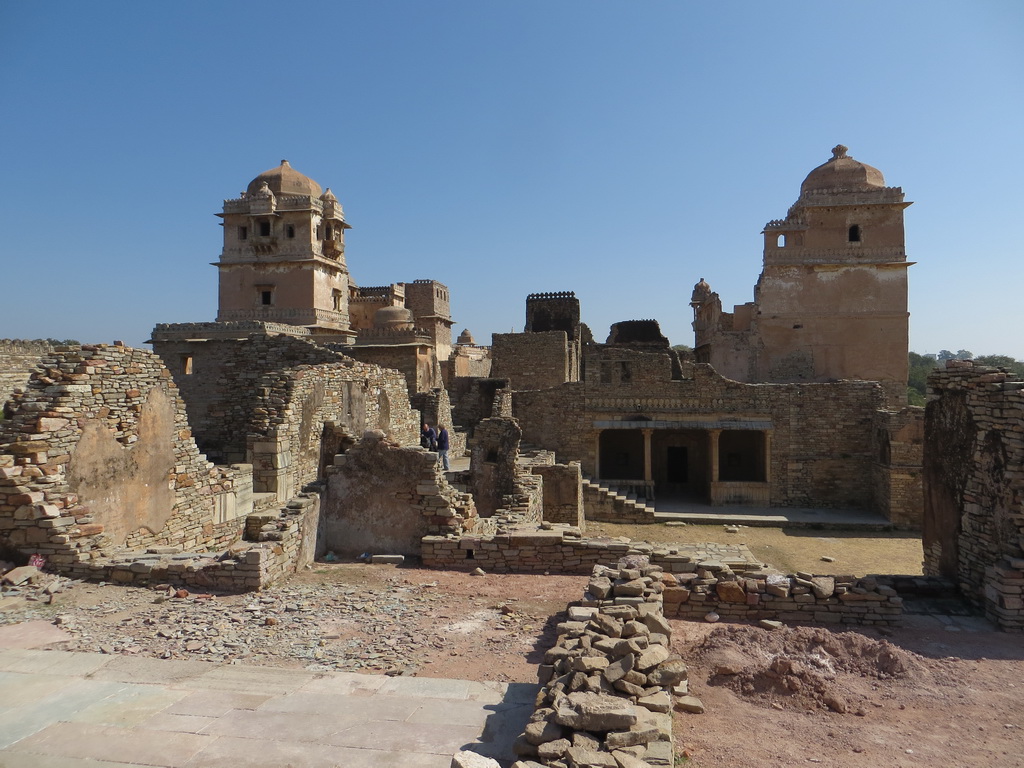
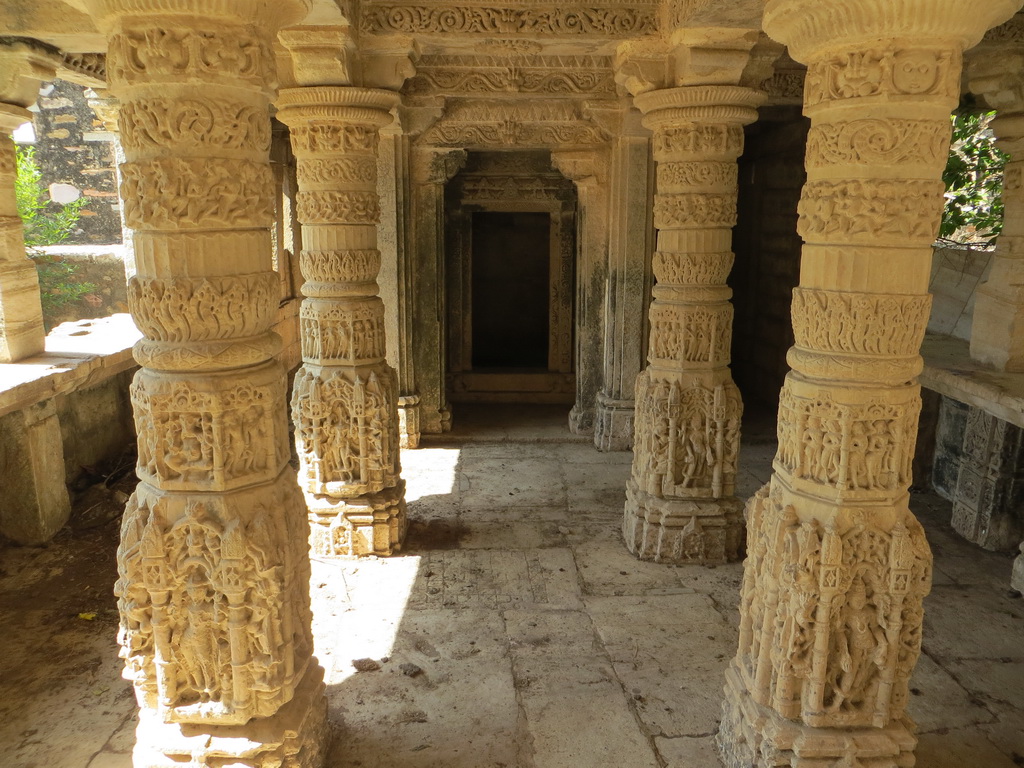
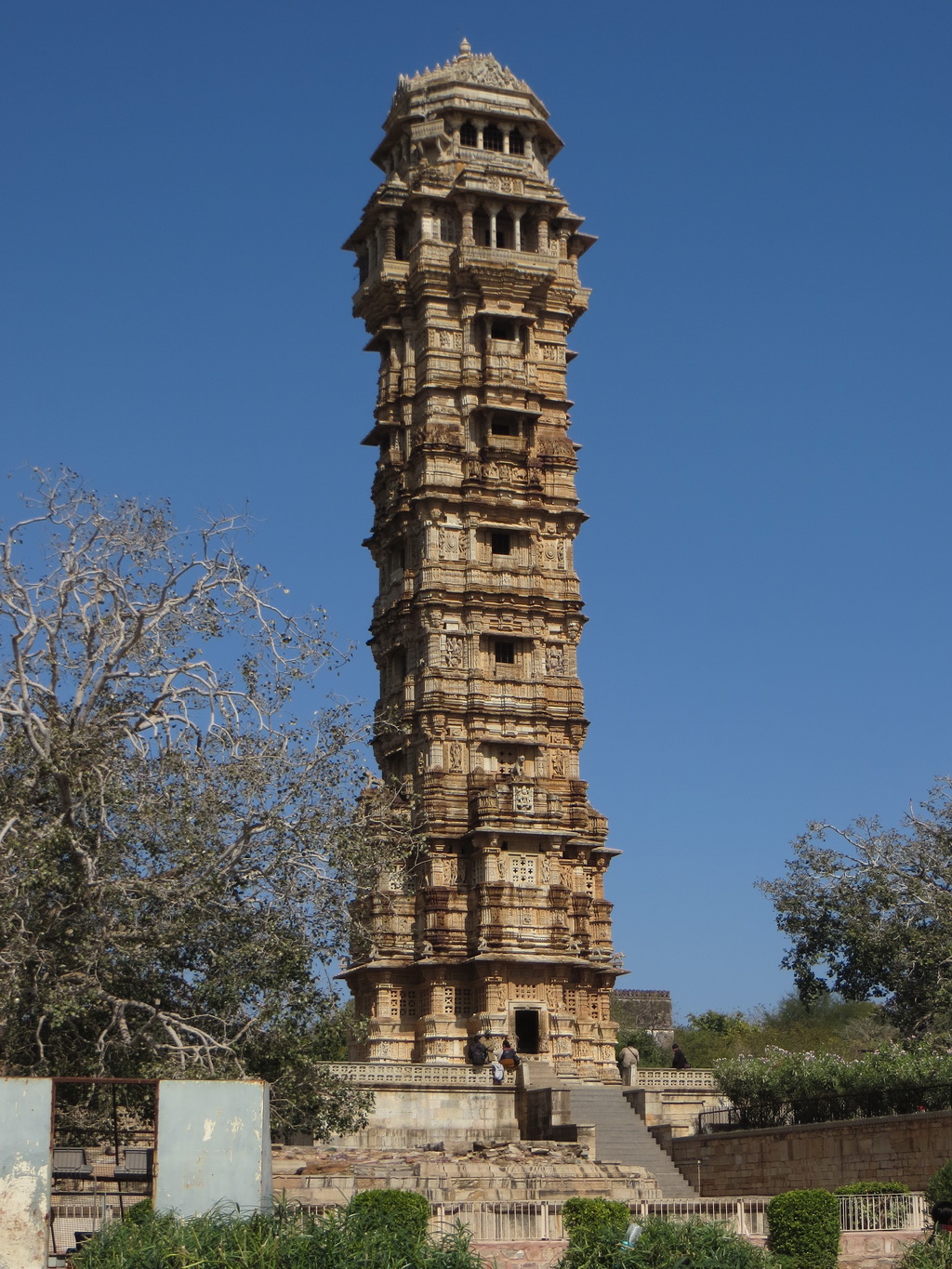
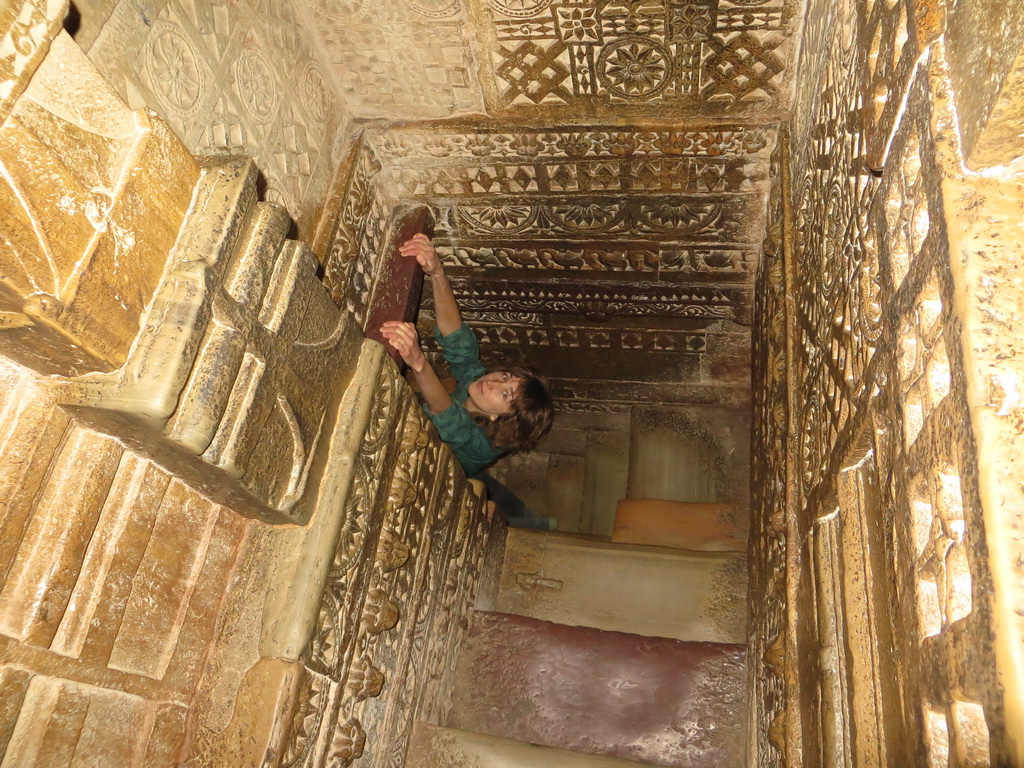
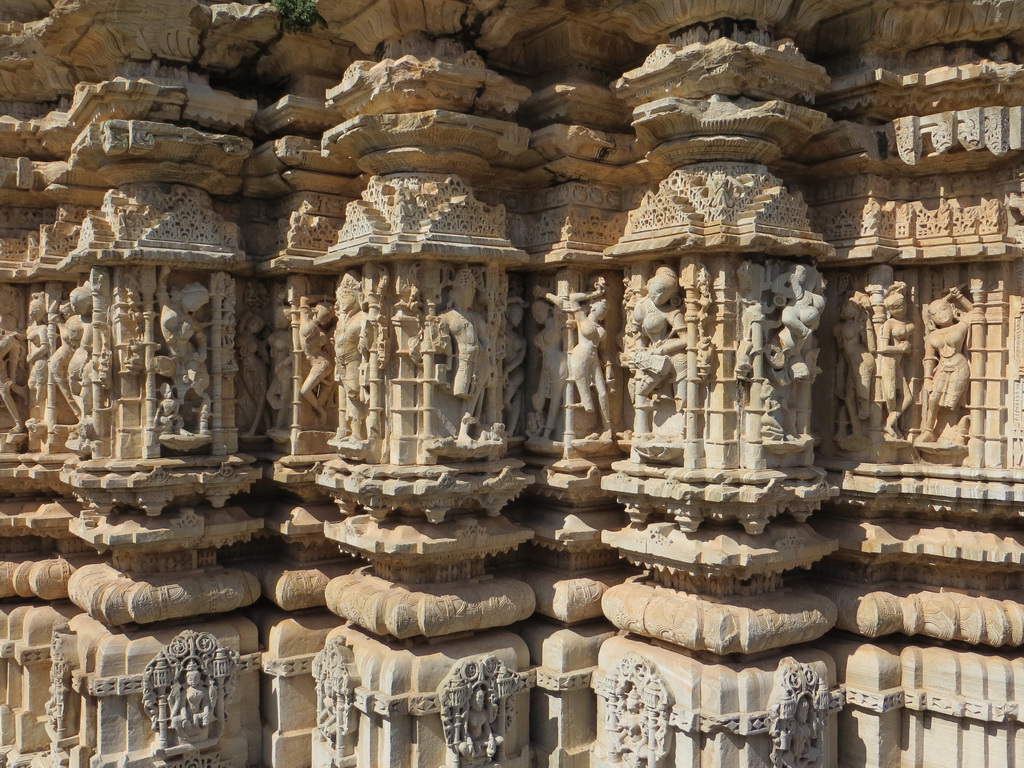
Пока шли до дворца повидали еще два храма, один из них храм джайнистов, отдаленно напоминающий тот, что мы видели в Ранакпуре. Храмы тут все очень красивые, но и очень похожие. Так что очередной храм смотришь уже без прежнего энтузиазма.
Дворец Рана Кумбха снаружи не очень понравился. Чтобы попасть внутрь нужно было заплатить дополнительно по 50 рупий с человека, там сейчас музей. Мы решили не идти. Вместо этого напротив дворца выпили самый дорогой чай за все наше путешествие – по 20 рупий (обычно чашечка чая стоит 10 рупий). Мы так и не поняли продавец чая нас обманул или это форт так негативно влияет на цену… Но спорить с ним уже после того как чай был выпит показалось странным… Недовольны ценой на чай пошли в северную часть форта.
Тут уже совсем не туристические места, тут живут индусы в старых домиках. На дорогах лежат коровы в вперемешку с собаками. Дети играют в крикет. Немного поразмыслив, решили ехать домой, тем более уже было около 5 часов. Тук тукер достаточно быстро согласился на 70 рупий.
Пока нас везли мы подсчитали, что тук тукеры тут хорошо зарабатывают даже по меркам Украины.
Если утром отвезти туристов, а вечером увезти и при этом весь день ничего не делать – можно заработать как минимум 200 рупий в день, а это почти 70 грн. И того каждый день такой незатейливой ненапряжной работенки и 2000 грн у вас в кармане.. Врачи в Украине получают меньше….
Делать в Читторгархе кроме форта совсем нечего. Сам городок, пожалуй, самый неприятный из всех где мы были. Столько бомжей и детей-попрошаек я еще нигде не видела.
Поэтому до вечера снова просидели в отеле а ужинать пошли в полюбившийся нам ресторан
Пробовали "Индийскую пиццу" - утаппам, по виду и форме и правда напоминающий пиццу. Только пицца вкуснее :)