India 2017

Day 20: February 7

Bijapur

India 2017

Itinerary

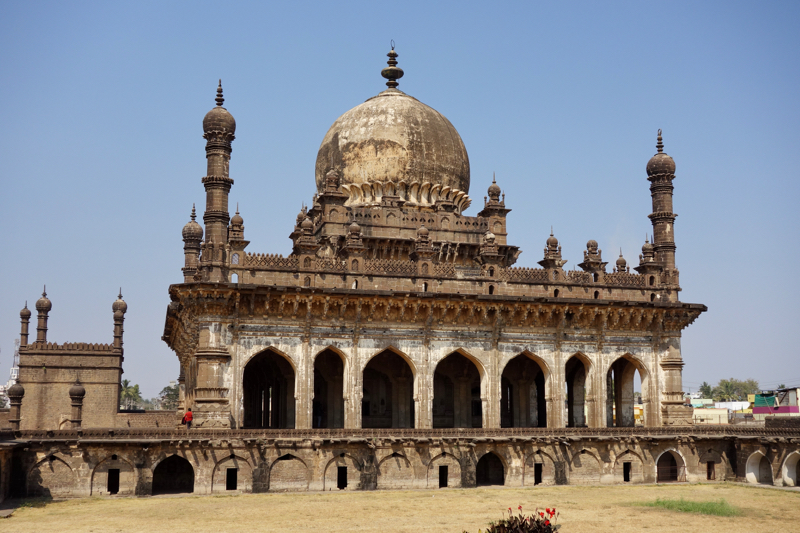
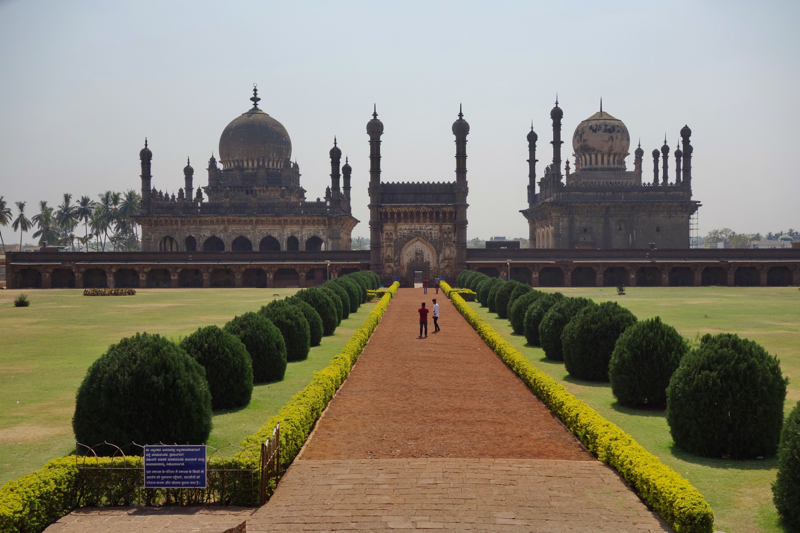
Our morning was leisurely, and only around 12 did we leave the hotel and head to Ibrahim Roza. We got there by tuk-tuk. Ibrahim Roza is a complex of two magnificent buildings — a tomb and a mosque. To our surprise, when we arrived there, there was almost no one there. Silence, beauty.

Ibrahim Rauza, tomb on the left, mosque on the right

Ibrahim Rauza, tomb on the left, mosque on the right

If I had to describe what I saw in one word, then perhaps the most fitting word would simply be “magnificent.” India has an incredible number of beautiful buildings (of course, no offense intended, but in my opinion Europe quietly takes a back seat. I love Europe very much, and there are also amazingly beautiful buildings there, but India is so multifaceted. Here you have forts so huge you can get lost in them, elegant palaces, caves, and mountains — there’s just everything here!)
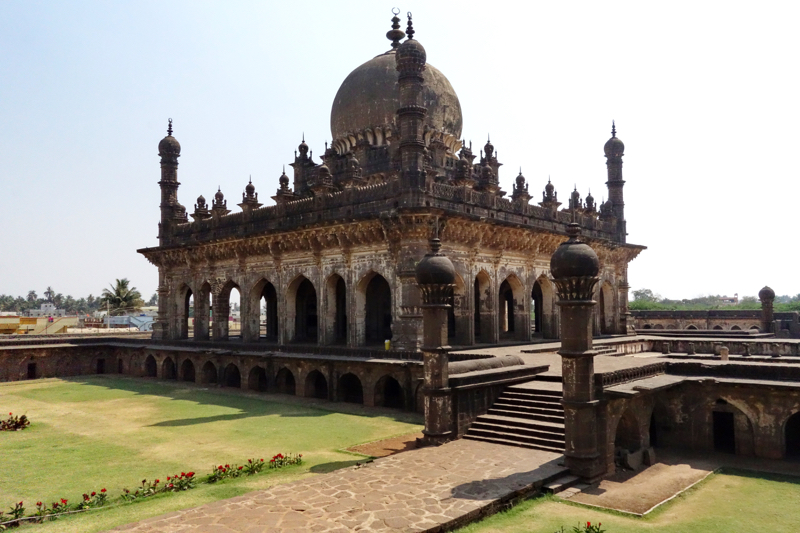
Tomb

Tomb

And still, every time you visit another landmark, you never tire of being amazed and astonished — how could they have created such beauty? And how does this nation, which could create such magnificence, now live in mud huts?

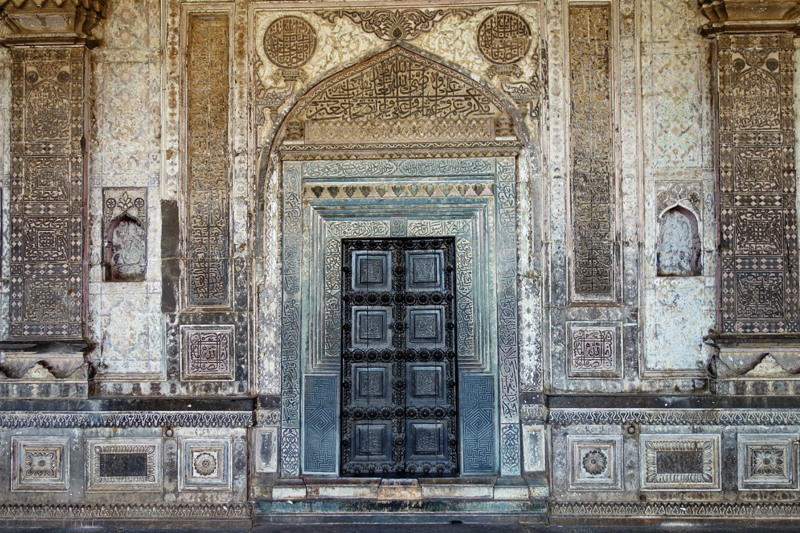
Dedicated to door lovers, the entrance to the tomb

Dedicated to door lovers, the entrance to the tomb

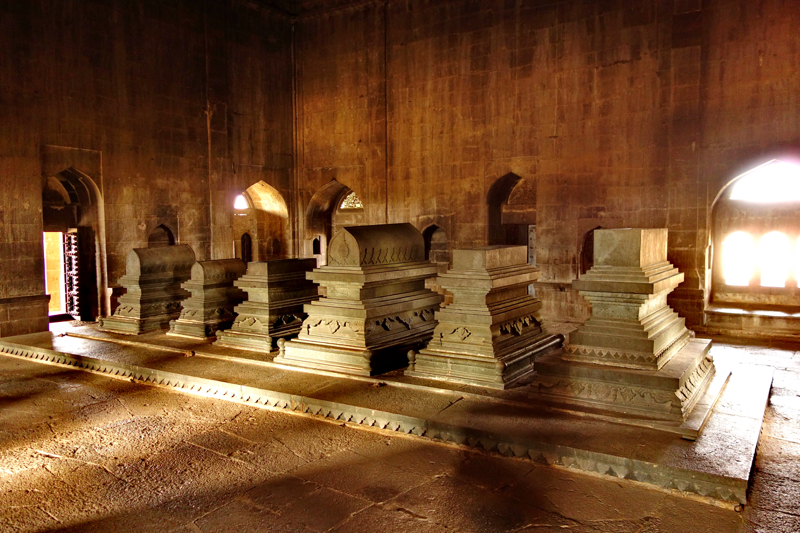
And this is what the tomb looks like inside

And this is what the tomb looks like inside

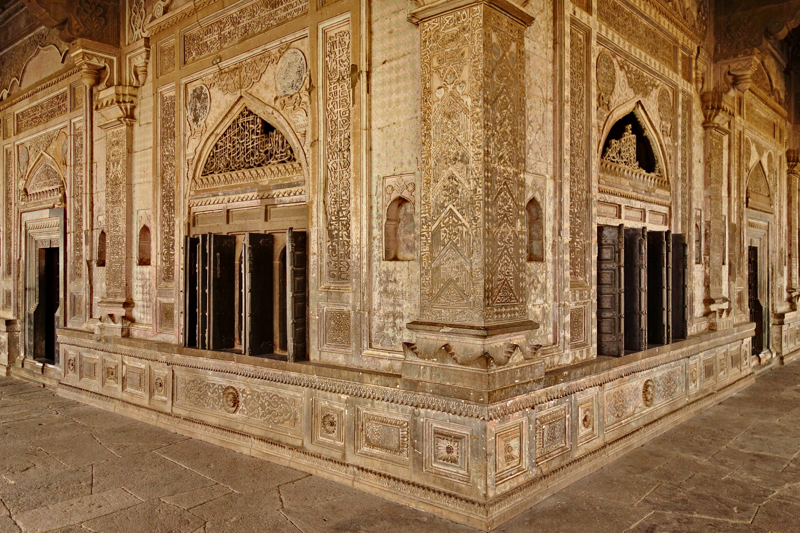
No words :)

No words :)

They say that Ibrahim Rauza served as the prototype for the Taj Mahal. And indeed, it is no less impressive than the great Taj Mahal (and that is one of my favorite buildings). Ibrahim Rauza is so harmonious and graceful. There are so many tiny details here that your eyes just dart around, and you stand there stunned by this beauty, trying to take it all in, somehow remember it, but you already know in advance that very soon it will all fade from memory and only vague silhouettes of what you saw will remain…

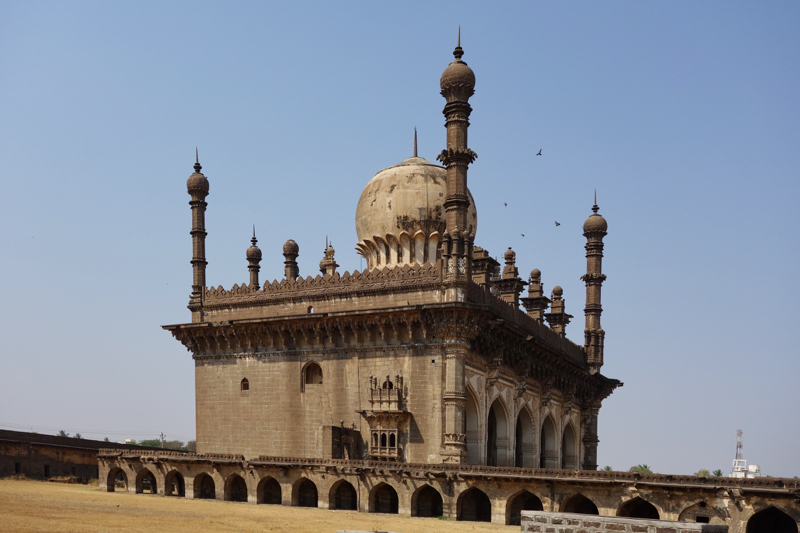
The Tomb of Ibrahim Roza from a different angle

The Tomb of Ibrahim Roza from a different angle

These little towers with onion domes are really like something out of a fairy tale, and for a moment it suddenly seems — how can this be, that I am really here, in this fairy tale, all alone, amid such extraordinary beauty. And you think that right now you’ll wake up and it will turn out that all of this is just a dream — but no, it is real after all. Well, imagine that. The whole building is covered with Arabic script. And those magical doors, and the wooden shutters — everything here simply inspires delight.

Opposite the tomb stands a mosque which, although beautiful, of course pales in comparison with the beauty of the tomb.

Mosque

Mosque

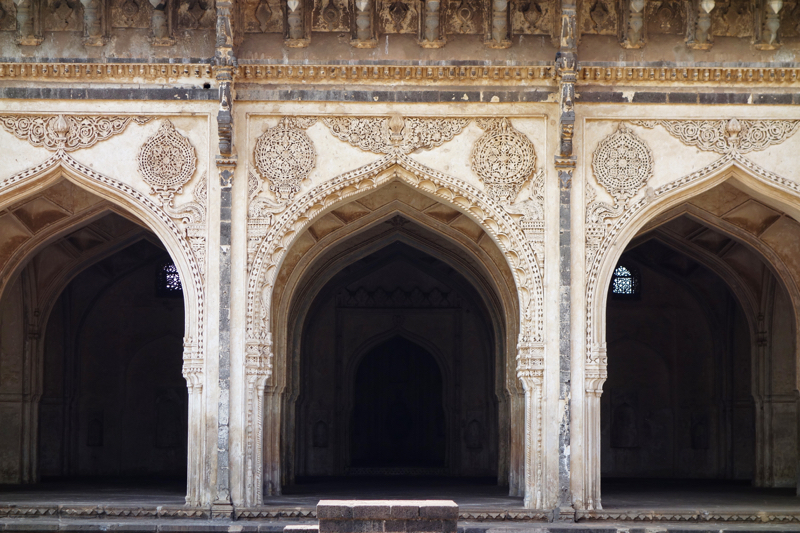
Arches of the Mosque

Arches of the Mosque

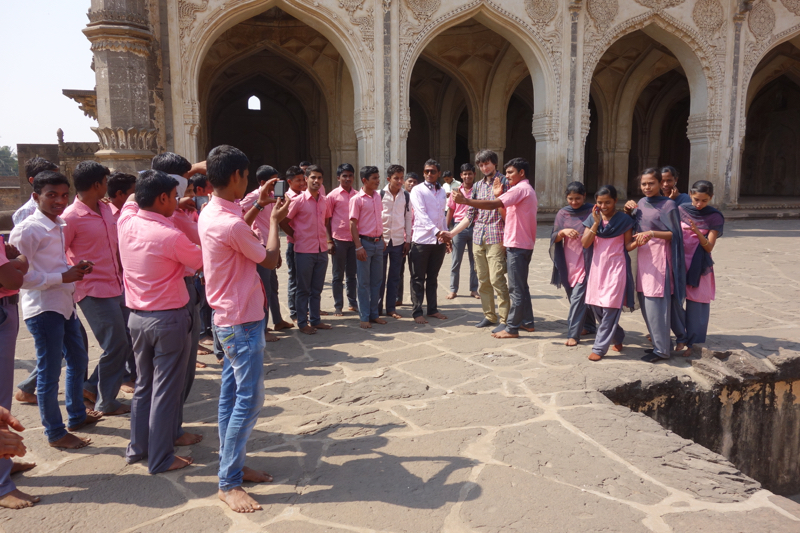
And then a group of schoolboys and schoolgirls in gray-and-pink clothes came along and, of course, wanted to take photos with us. They surrounded Volchy in a tight circle — everyone wanted to get into the shot, even the serious teachers. I managed to escape, though the schoolgirls caught up with me there and kept asking me to take photos with them. They kept asking who “that boy” was to me (meaning Volchy) and whether we had children.

Wolf Among Schoolchildren

Wolf Among Schoolchildren

(By the way, Volchyi later read on Wikipedia that in India, love marriages make up no more than 20%. Practically all marriages are arranged, that is, marriages of convenience, and some are even against the consent of the newlyweds. And there are very few divorces here, only 1%.)

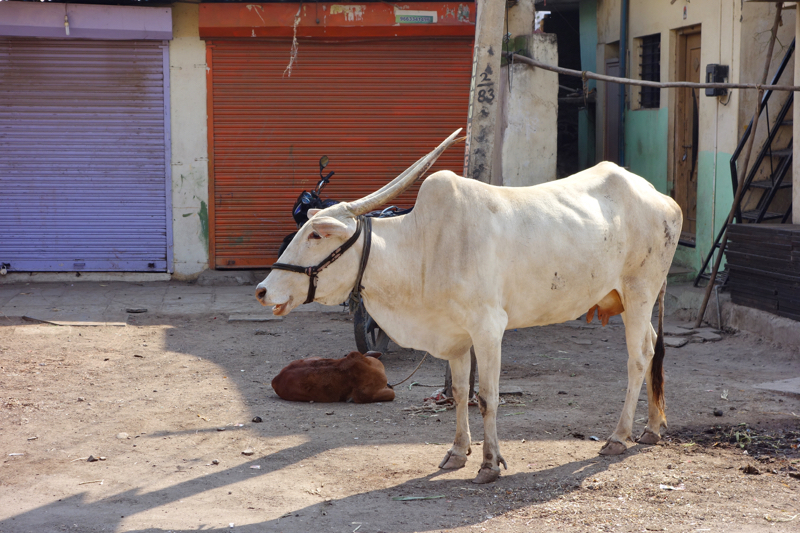
In India, even cows smile

In India, even cows smile

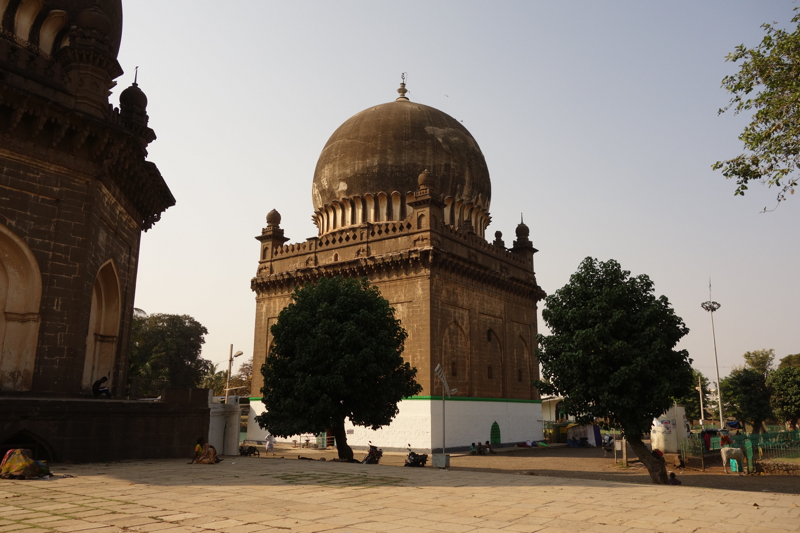
Then we walked on to the twin tombs of Jod Gumbad, but it felt pretty creepy there. Indian women were lying everywhere, it was very dirty, and the place really wasn’t at all inviting for sightseeing. So we quickly retreated from there.

The Twin Tombs of Jod Gumbad

The Twin Tombs of Jod Gumbad

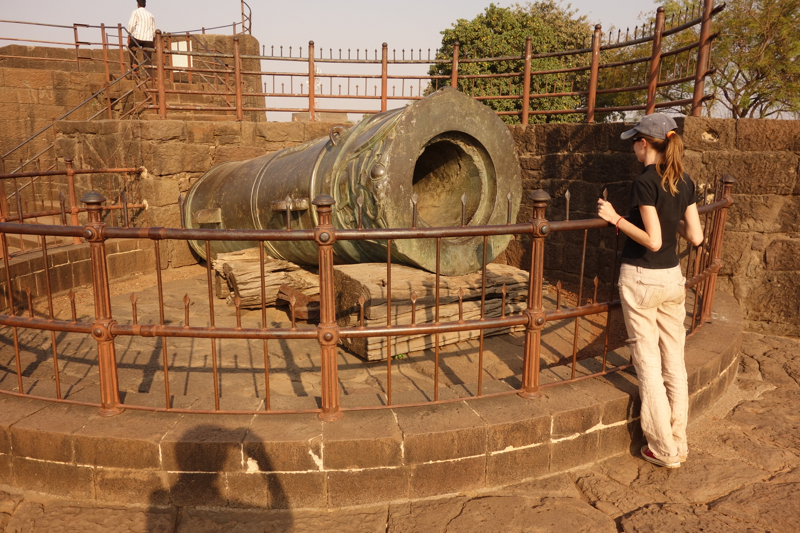
By that time we were already pretty tired, of course, so we barely made it to the observation tower, and from there to the huge cannon, one and a half meters in diameter and 4 m long.

Huge cannon

Huge cannon

If you look at the map, you can see that the city of Bijapur is surrounded by a wall with towers. The wall and towers really do exist — they are everywhere here, and the cannon is located on one of the towers. We sat here for a while in the shade and took a break.

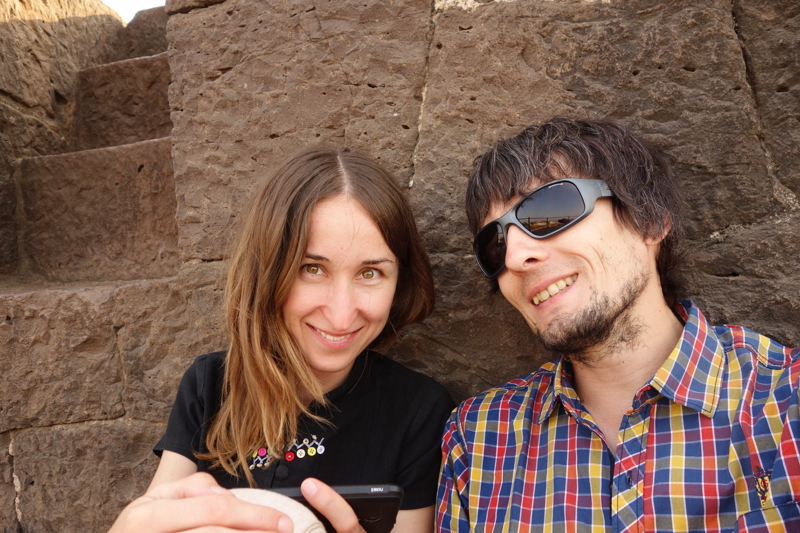
Hiding in the shade, Volchyi is fooling around and taking a selfie

Hiding in the shade, Volchyi is fooling around and taking a selfie

We still had one more thing to do — we had to go to the bazaar.

We printed out the photos for the Indian man with whom we had taken pictures in his spice shop. And we wanted to give him those photos. By the way, printing photos here is quite an epic undertaking; we spent at least half an hour talking with the Indian boy until he finally understood what we needed (and all we needed was just to print the photos!!!). He still printed them not quite the way we wanted, but oh well.

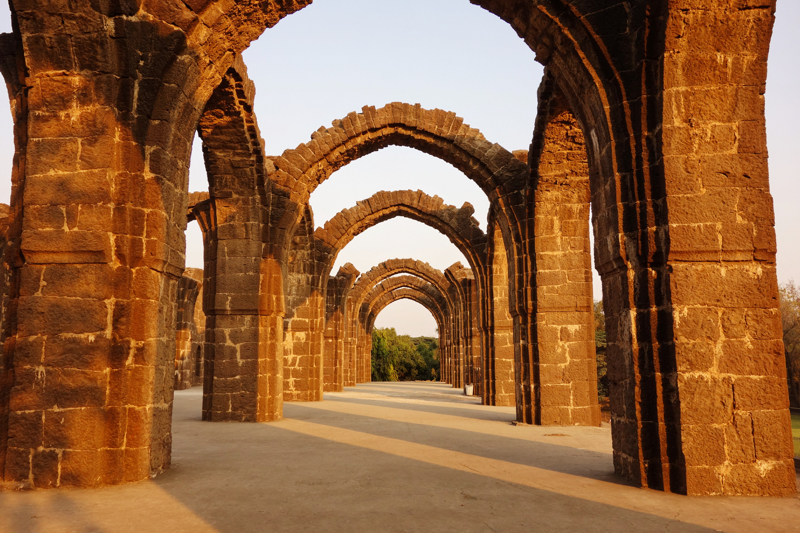
Not far from the bazaar there is another attraction, the Bara Kuman archway, which is all that remains of the mausoleum.

The arches of Bara Kuman lit by the setting sun

The arches of Bara Kuman lit by the setting sun

We sat a little in the shade of the arches and went home…