India 2017

Day 9: January 27

Maheshwar-Mandu

India 2017

Itinerary

We decided to get up early to have time to visit the palace once more in the morning, before a crowd of Indians rushed in there.

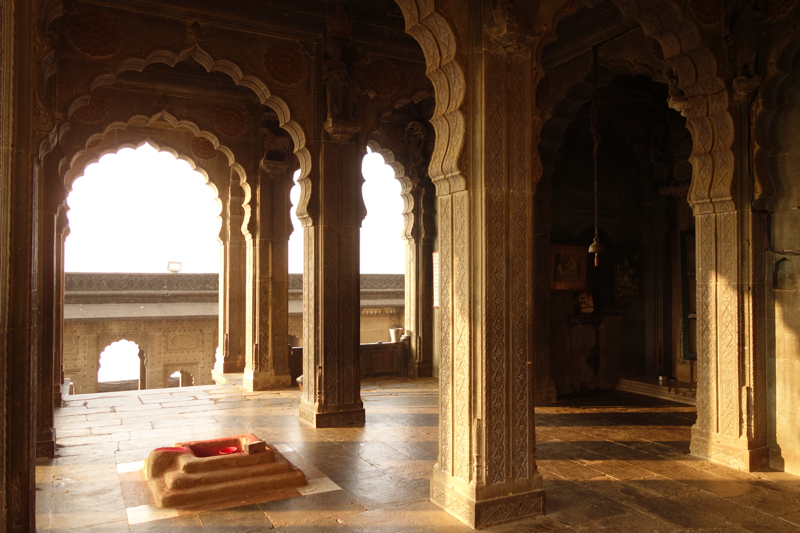
Morning at Maheshwar Palace

Morning at Maheshwar Palace

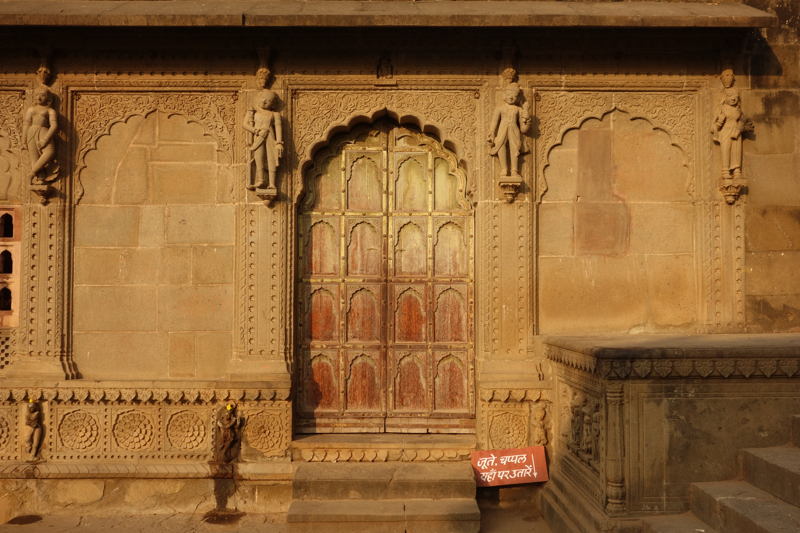
In the morning, there really were almost no people, and the sun had just risen. So we walked in silence and peace. Once again, we went around all the little arches and balconies, climbed the steps, went down to the river, said goodbye to all the pictures and figurines, and headed to the hotel to drink tea with the remaining sweets.
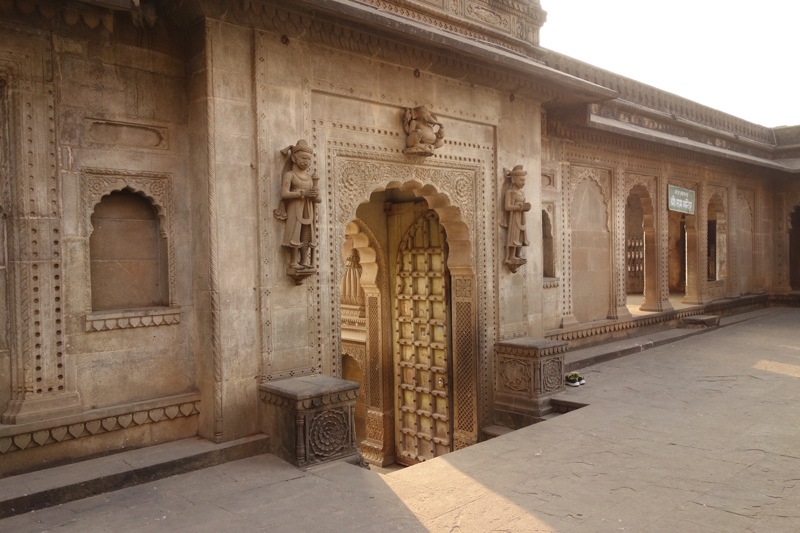
Saying Goodbye to the Figurines

Saying Goodbye to the Figurines

Saying Goodbye to Doors

Saying Goodbye to Doors

And then we headed home, our uncle had already called us and was asking how we were doing. We made a stop in the town of Dhamnod, the largest town on the way to Mandu. Its main street is very lively; they sell all sorts of things here, from bananas to kerosene lamps, which, by the way, are very beautiful. I would have bought one for myself as a room decoration, if only we could buy anything… And we’re already lugging around my colorful hanging birds.

In Dhamnod we had tea with samosas at a roadside place. They even specially wiped the bench with a cloth for us, like honored guests. So funny.

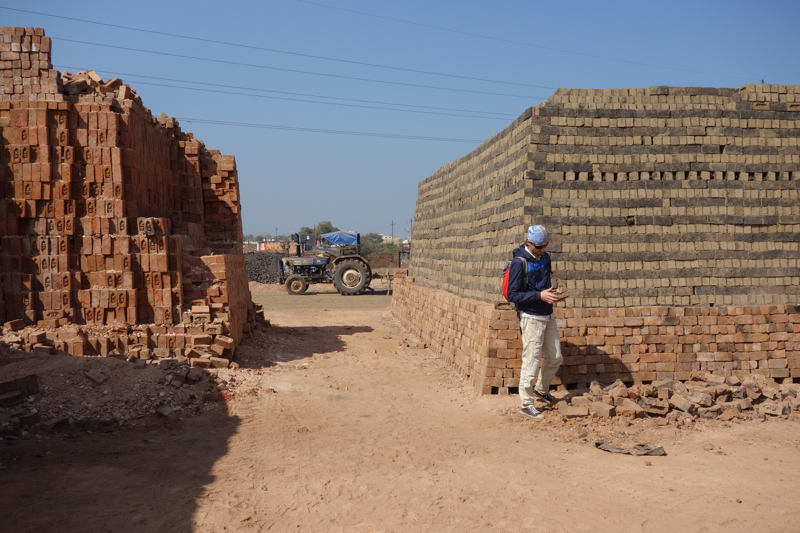
After Dhamnod, we stopped once more along the way to visit the local brick factory.

At the brick factory

At the brick factory

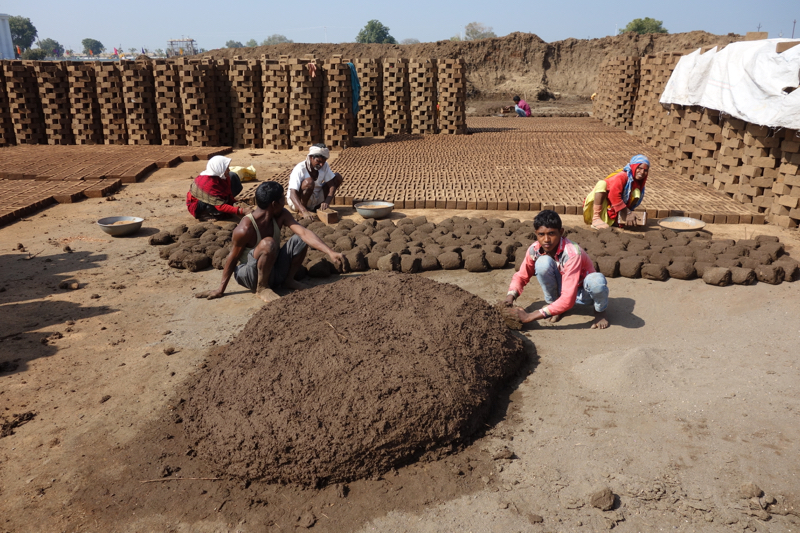
Bricks are made here by hand. This probably sounds very strange, but yes — each brick is made separately by hand. The whole family works at the brick factory — the son kneads the “dough” for the bricks and shapes it into little rolls. The mother puts the roll into a mold, and a brick comes out. The father arranges the bricks for drying.

Family at Work

Family at Work

First, the bricks are simply dried in the sun so they harden a little, and then they are stacked one on top of another and coal is lit beneath them. The brickmakers live right here, in shacks. But at least it’s not far to work… The younger children run around the factory and delight in the pile of coal — such a simple childhood without smartphones.

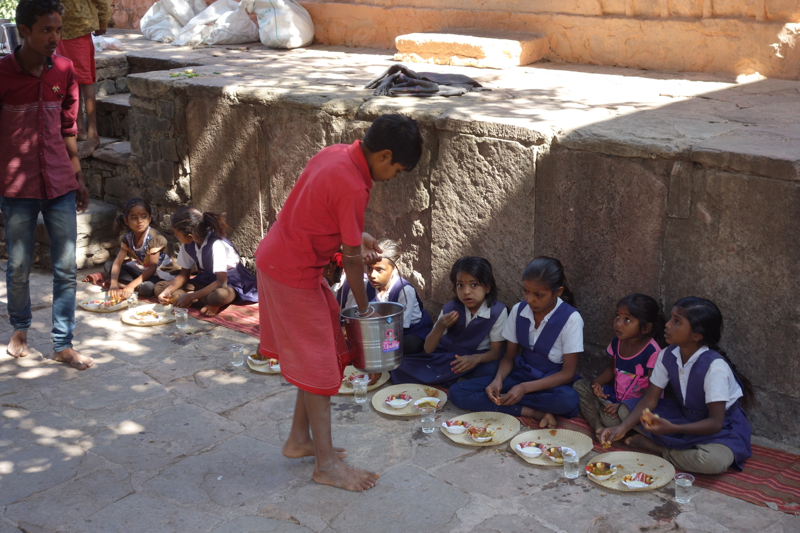
Quite close to Mandu, along the road, we noticed some activity — vendors were selling all sorts of things, including baobab fruit. That’s why we stopped — to buy a baobab fruit. But it turned out that, among other things, it was also the entrance to a temple, hidden from the road by a staircase leading down the mountainside. At the temple, food was served for free; we were also seated and fed — with flatbreads and soup. And both the soup and the flatbreads can be eaten in unlimited quantities; they are constantly brought around and offered.

Schoolchildren are eating in the temple. We are sitting nearby. A boy in red is serving food.

Schoolchildren are eating in the temple. We are sitting nearby. A boy in red is serving food.

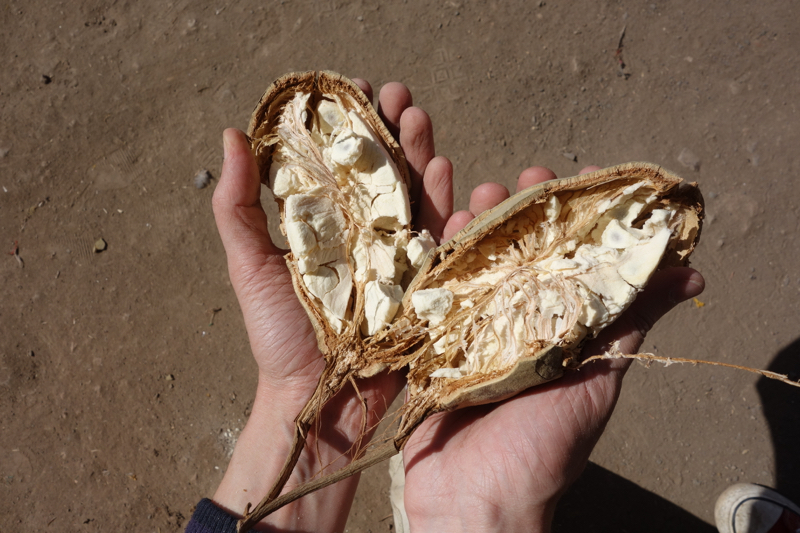
We returned the moped on time, and it wasn’t even 2 p.m. yet. The owner was overjoyed. We went back to our tried-and-true hotel with the big window. While we were waiting for the room to be cleaned, we cracked open a baobab fruit; how to eat it remained a mystery. Inside, it consists of something strange, like compressed dust and very hard, fairly small seeds. We picked out the seeds, and Volchyi wants to grow a baobab.

The inside of a baobab fruit

The inside of a baobab fruit

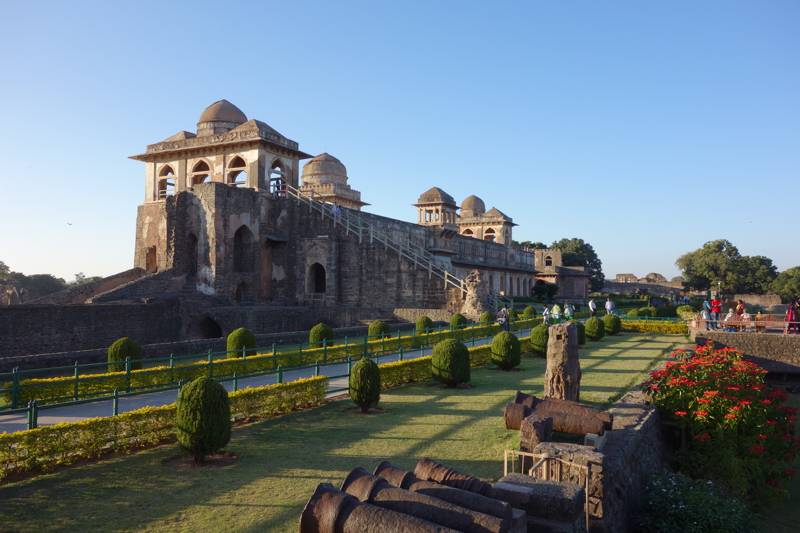
We didn’t have much time to sit around at the hotel, as we still needed to make it to the Jahaz Mahal ruins complex, a kilometer from the center of Mandu. We chose a very good time to visit this complex: the sun was no longer so bright, and it wasn’t as hot.

Palace-Ship

Palace-Ship

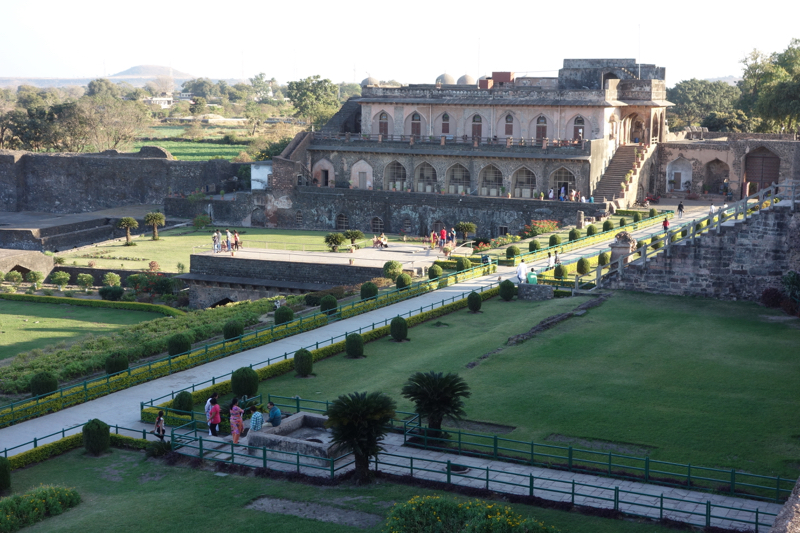
There is a beautiful ship-palace here, as well as many ruins — a hammam, stables, a palace for negotiations, and a mosque. There are also many pools of different shapes, which are apparently filled during the rainy season, and then it becomes especially beautiful.

View of the stables

View of the stables

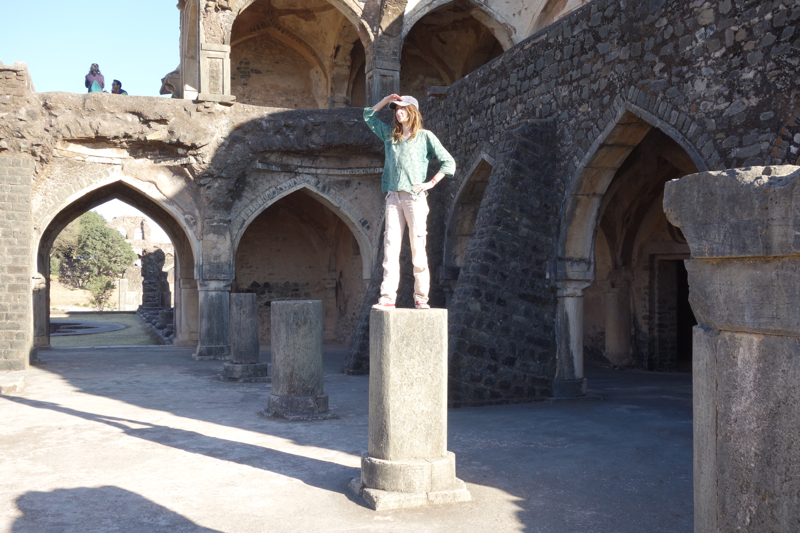
Having fun. I’m portraying Lenin on a pedestal.

Having fun. I’m portraying Lenin on a pedestal.

The day flew by like an instant, and tomorrow we leave Mandu.