
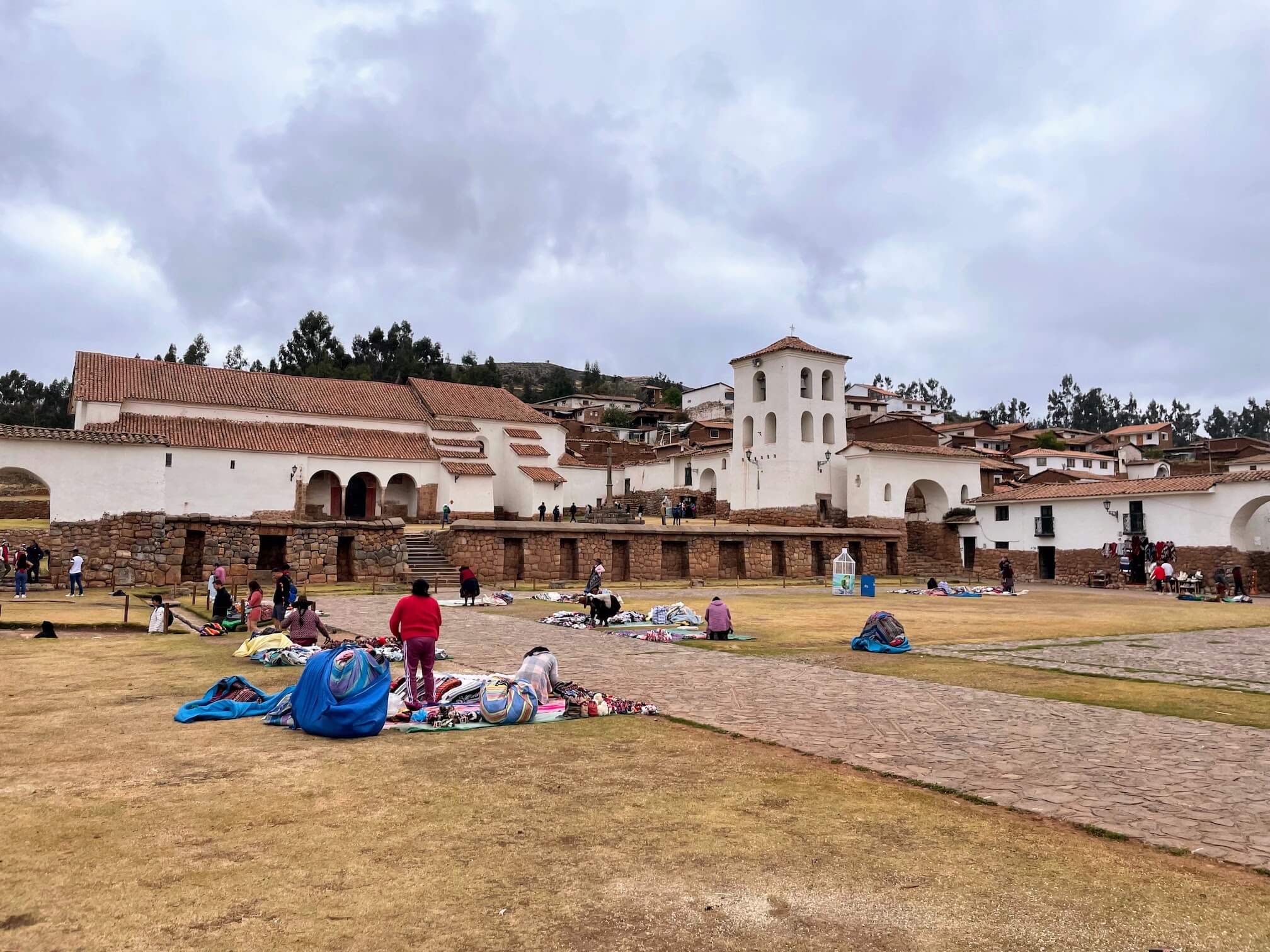
Vendors display souvenirs in the square in front of the colonial church in Chinchero
Chinchero - Moray - Maras - Pisac
Peru
Today we have a tour again.
Because I had been sick for so many days, we didn’t have time to visit a couple of places near Cusco that I was interested in seeing.
We have our last day here left, and the only way to see everything is to go on a tour.
The tour was very busy. We visited many places.
I don’t really like tours. I prefer to travel on my own, at my own pace.
But what can you do…
At 7 a.m. we took a taxi to Cusco’s main square, where we got into the tour operator’s minibus and headed to the town of Chinchero.
What’s interesting here are the terraces that the Incas used for agriculture and the colonial church built on the foundation of an Inca palace.
Vendors display souvenirs in the square in front of the colonial church in Chinchero
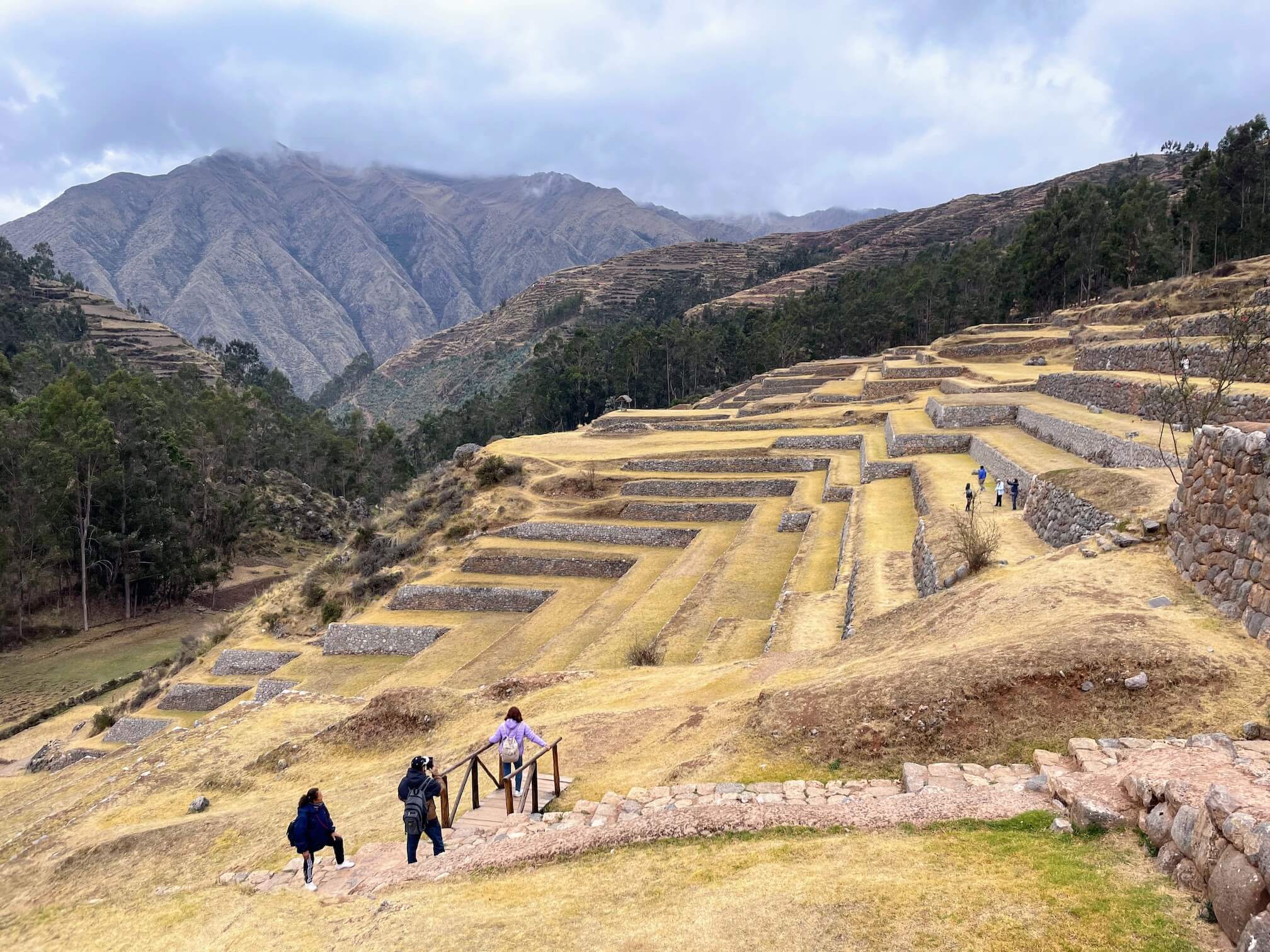
Agricultural Terraces in Chinchero
On the outskirts of Chinchero, we were taken to a local shop specializing in alpaca wool products.
We were shown how the wool is washed and told a bit about how it is dyed using different plants and fruits.
Only natural products are used for dyeing.
It’s cool that to get the purple color, they use purple corn, from which we made chicha morada.
After that, we had the opportunity to buy something. The shop had nice items, but we didn’t have much time and never managed to buy anything.
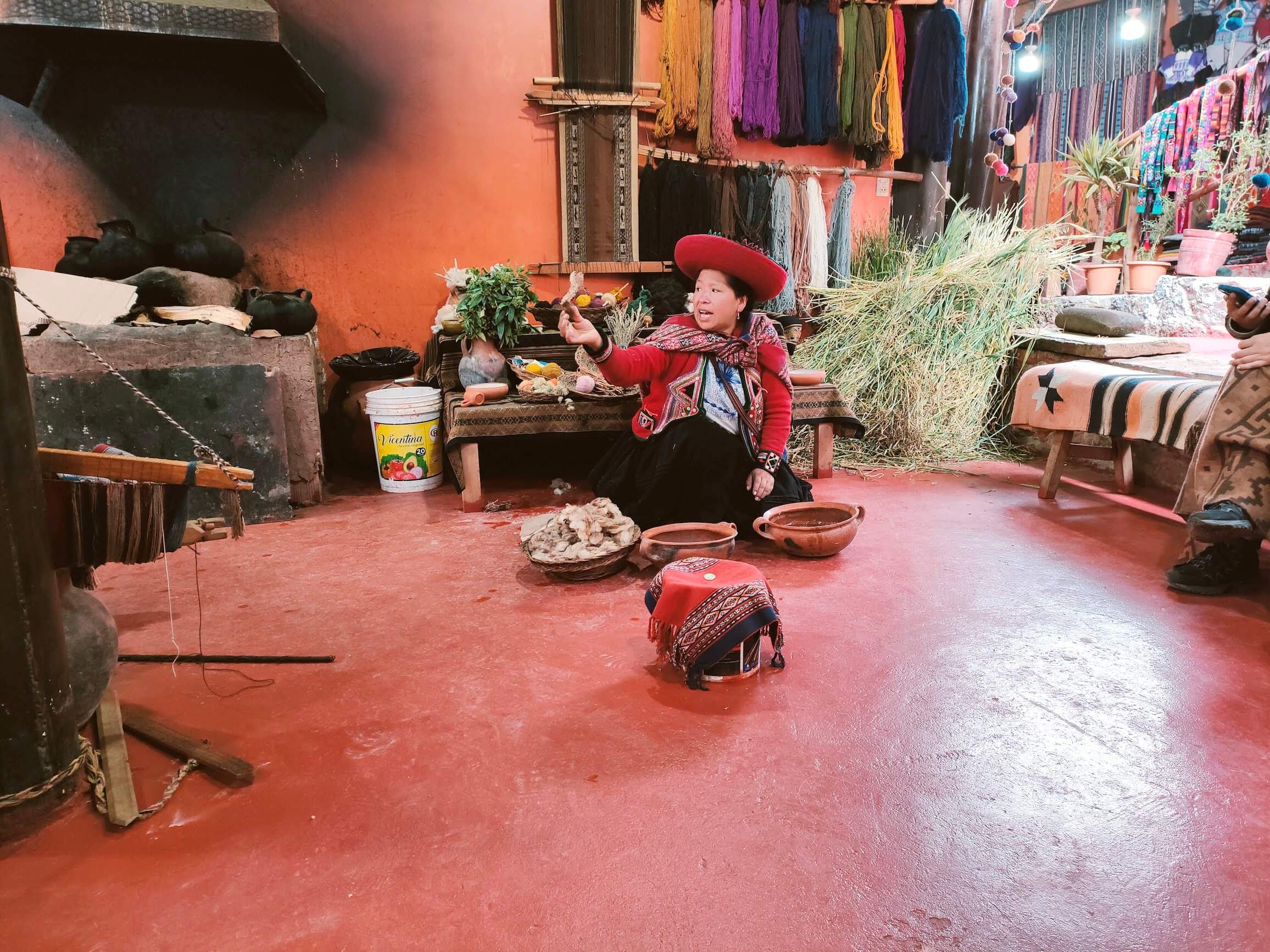
A woman demonstrates how wool is washed. Behind her, wool of various colors is hanging.
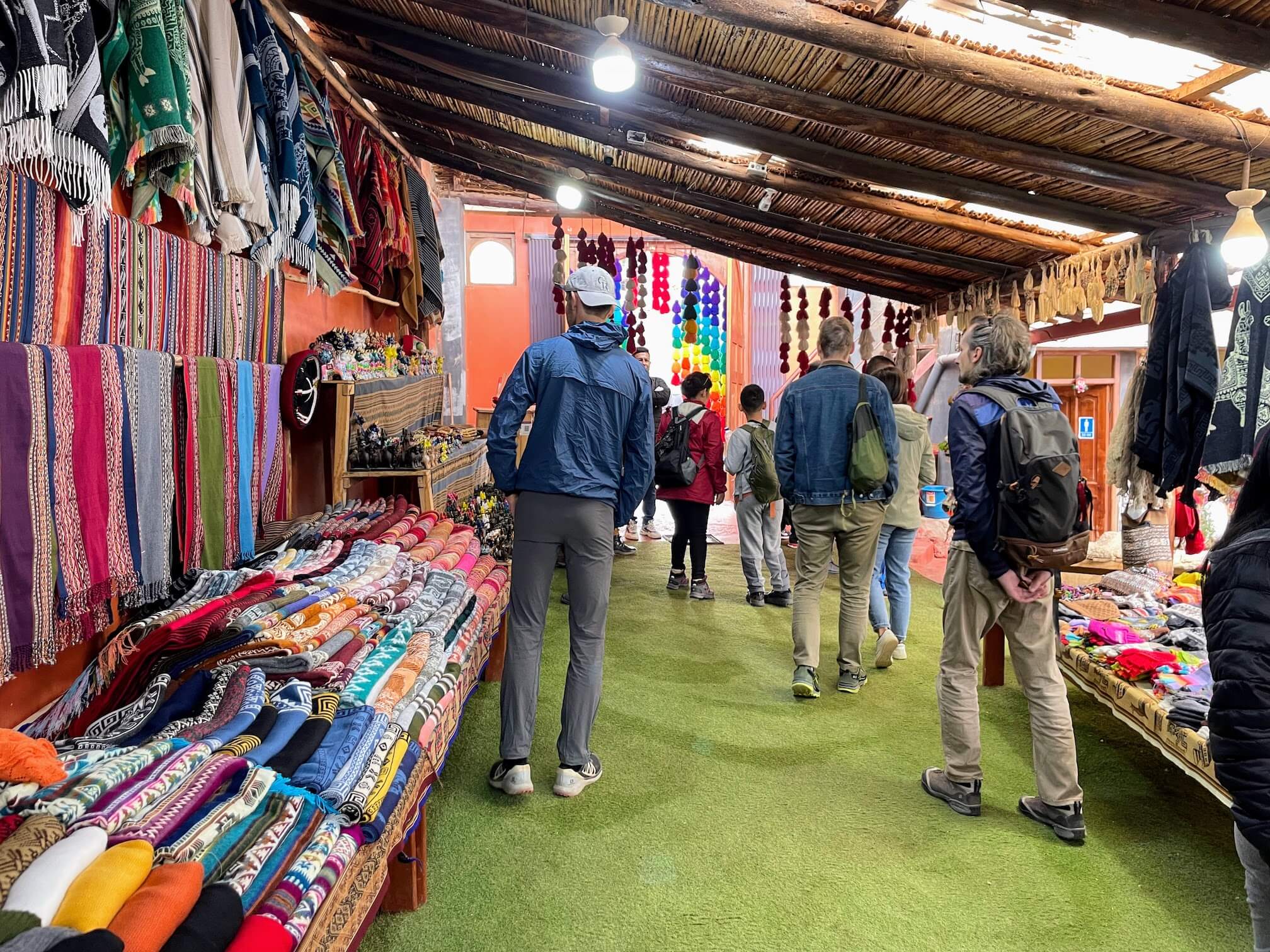
Alpaca products
Next we headed to Moray.
There are beautiful views and circular terraces here.
Scientists did not immediately figure out that these were agricultural terraces too.
At first, they thought it was something like an amphitheater.
Now the popular view is that this was the Incas’ “laboratory.”
The lower the terrace, the higher the temperature.
The Incas experimented with plants, trying to recreate the best conditions for growing potatoes, corn, and coca.
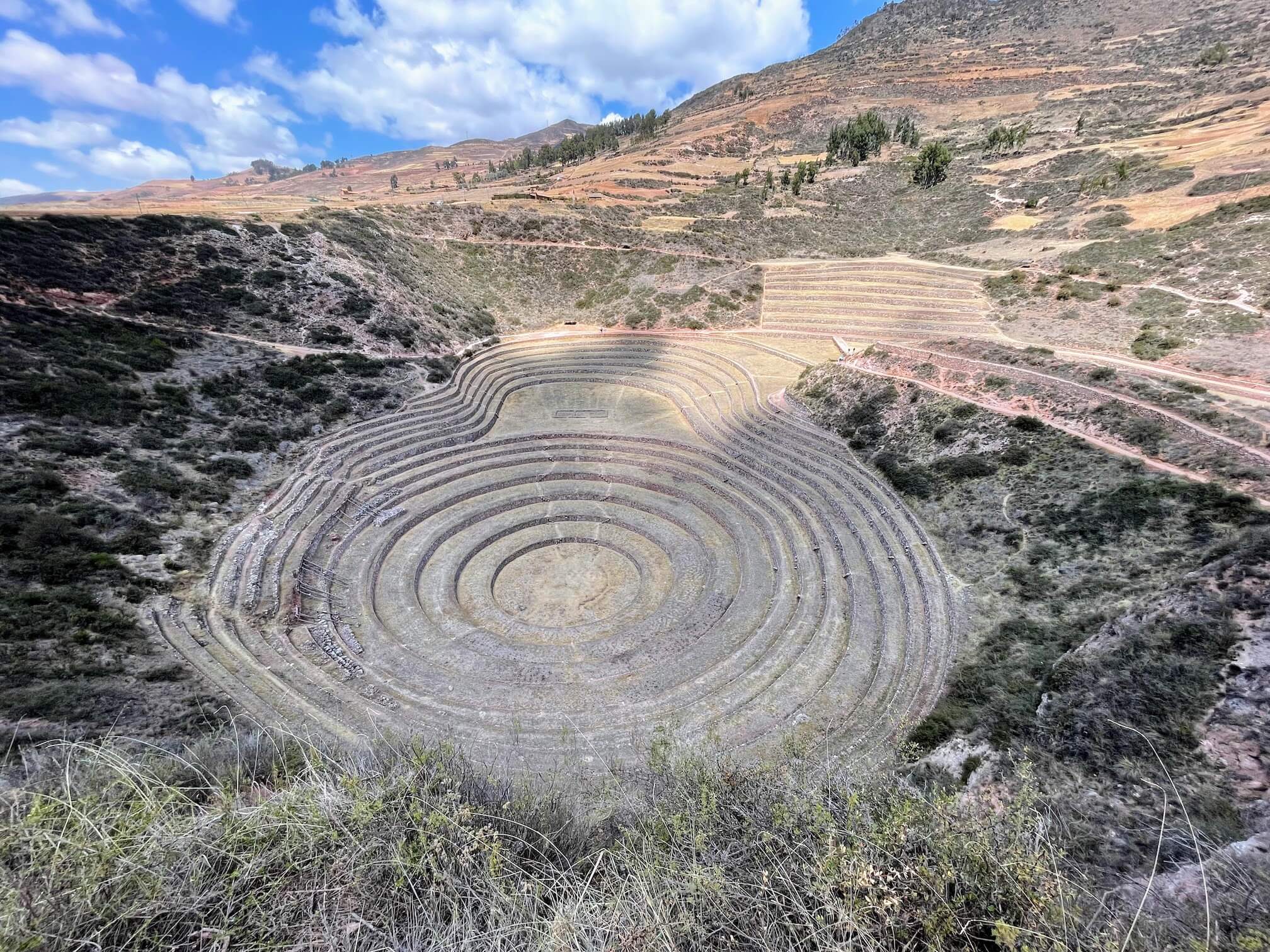
Circular terraces in Moray
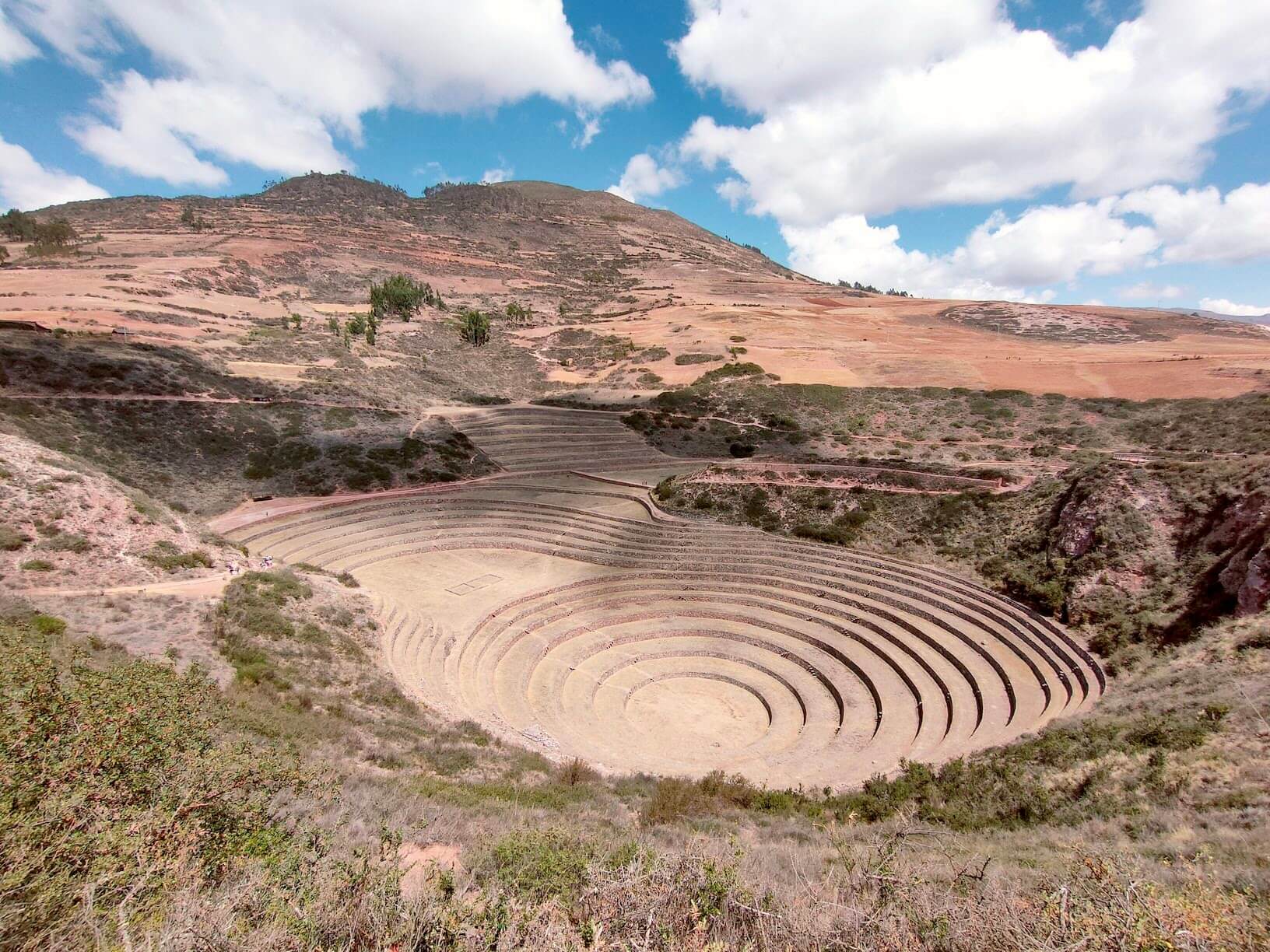
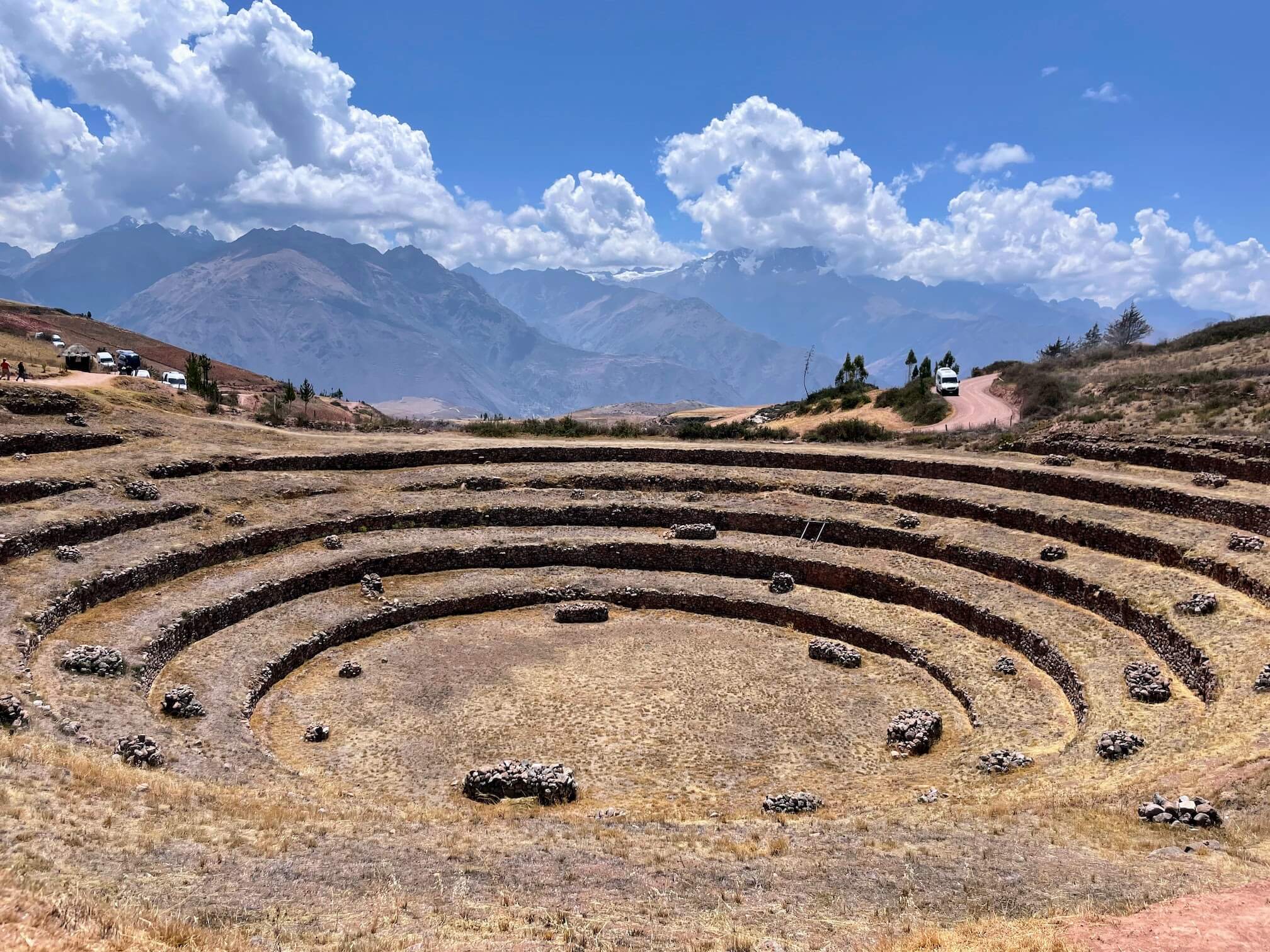
The terraces are smaller in size
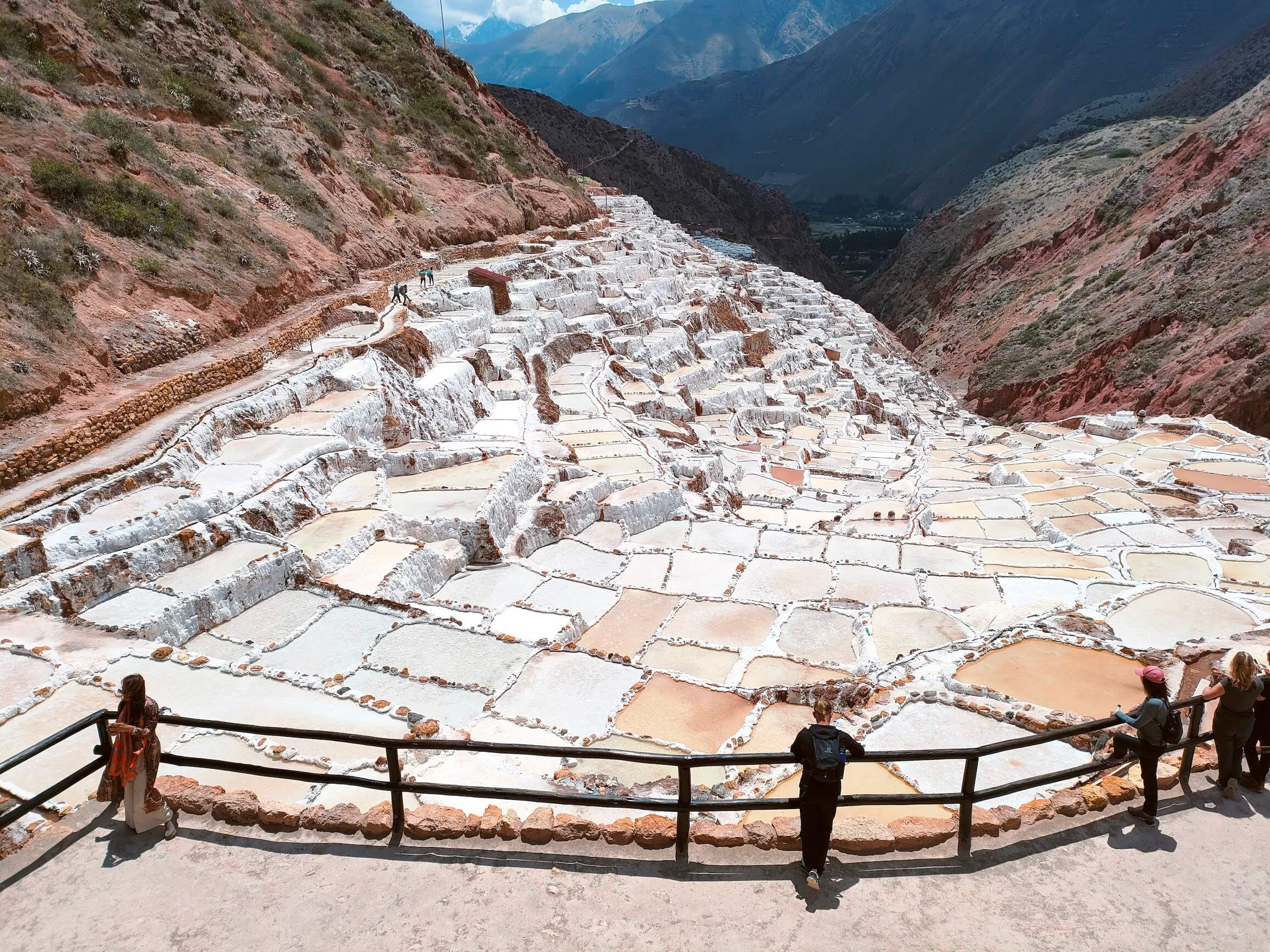
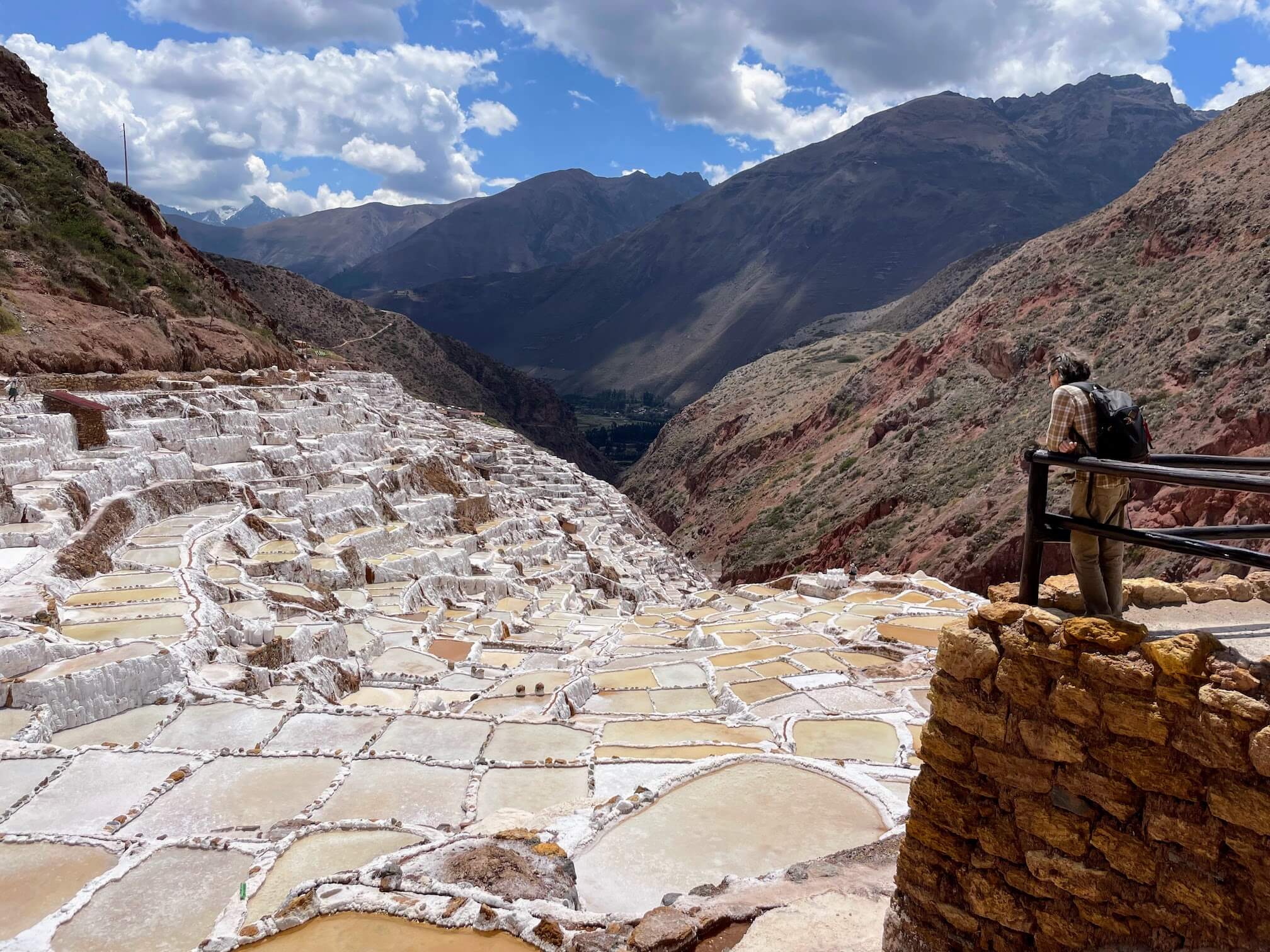
After Moray, we headed to the place I wanted to see most of all — the salt mines, which were invented back in pre-Inca times.
The salt “pools” are located in a valley between the mountains. A salty spring from the mountains flows there.
It’s fascinating how they direct the salty water through narrow channels, using “forks” where the water is distributed in different directions.
Terraces have been made for tourists. Visitors are not allowed into the salt pools themselves.
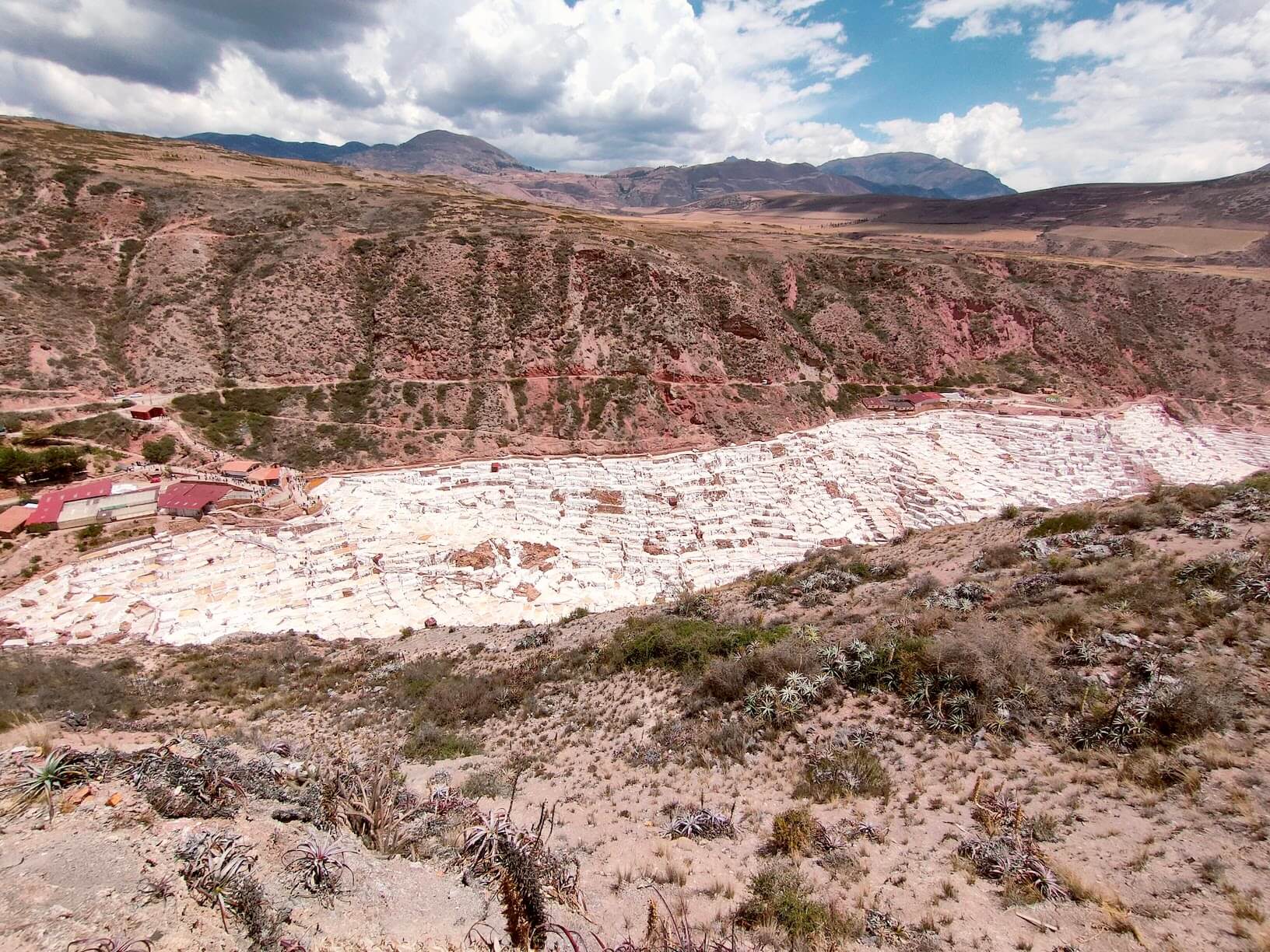
Maras Salt Mines. View from above.
Terraces for tourists
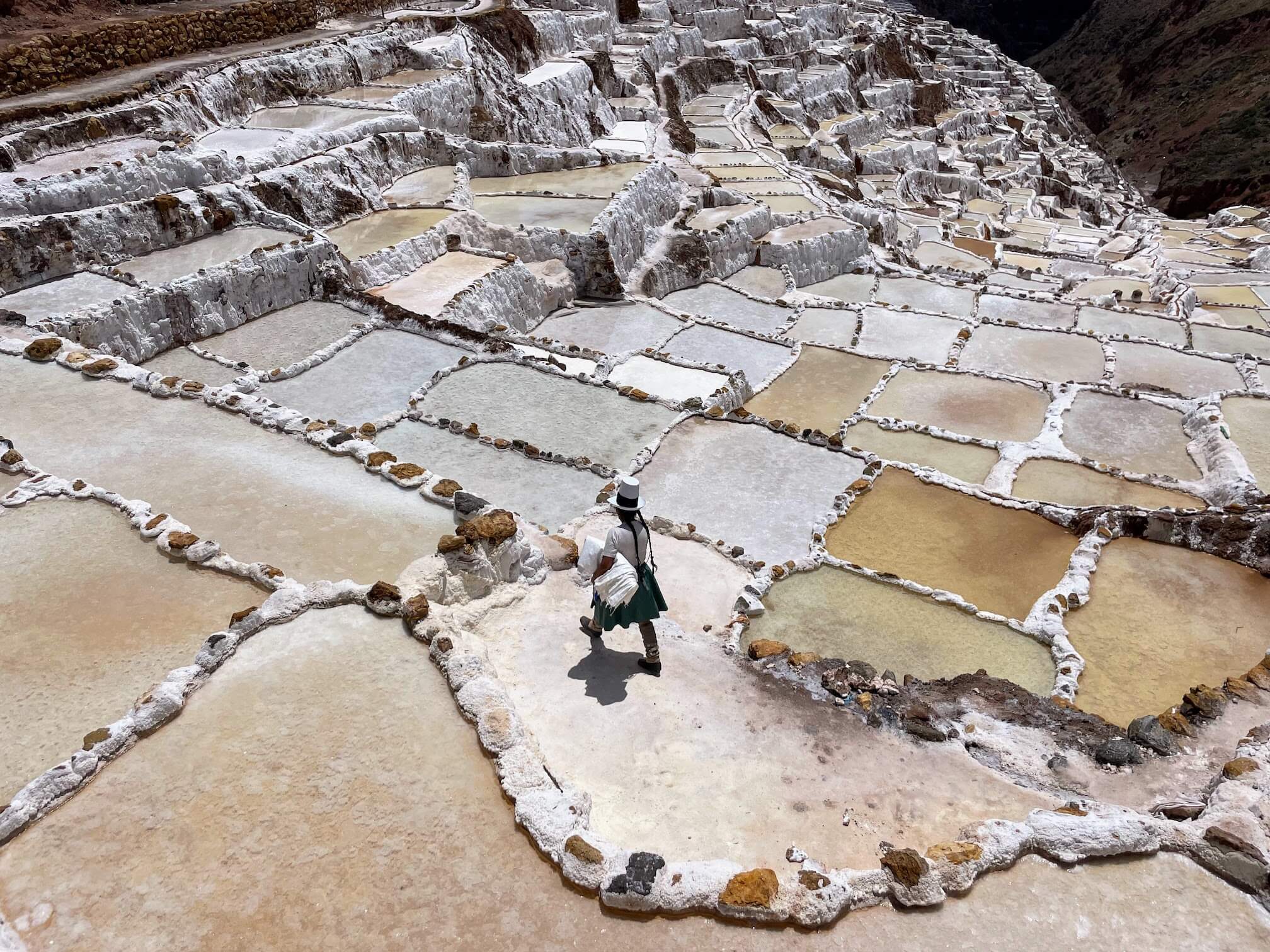
Local residents at work
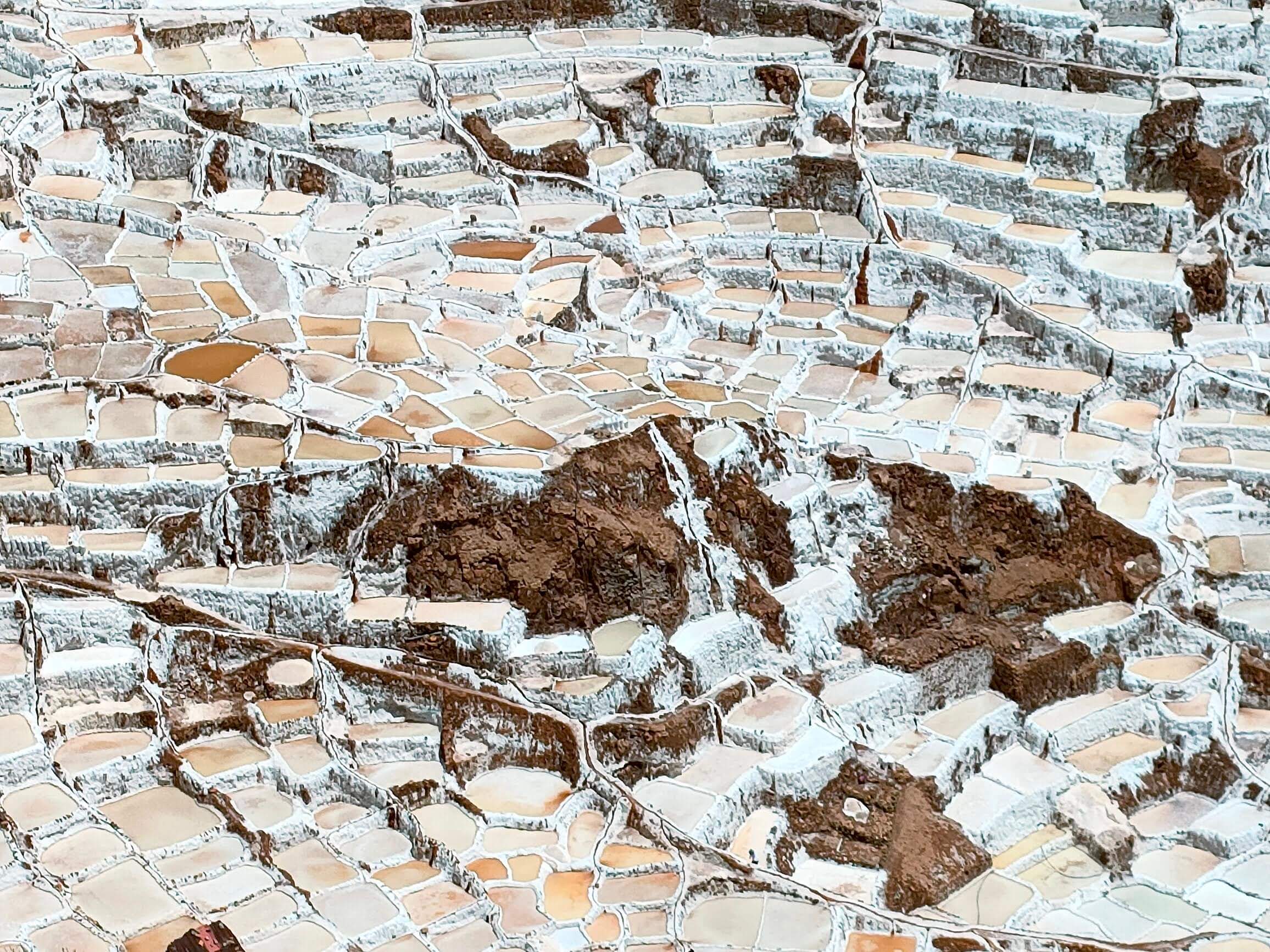
Then there was lunch, after which we headed to Ollantaytambo, where we had already been. While our group visited the ruins, we took a little walk around the town.
They bought me a little bracelet :)
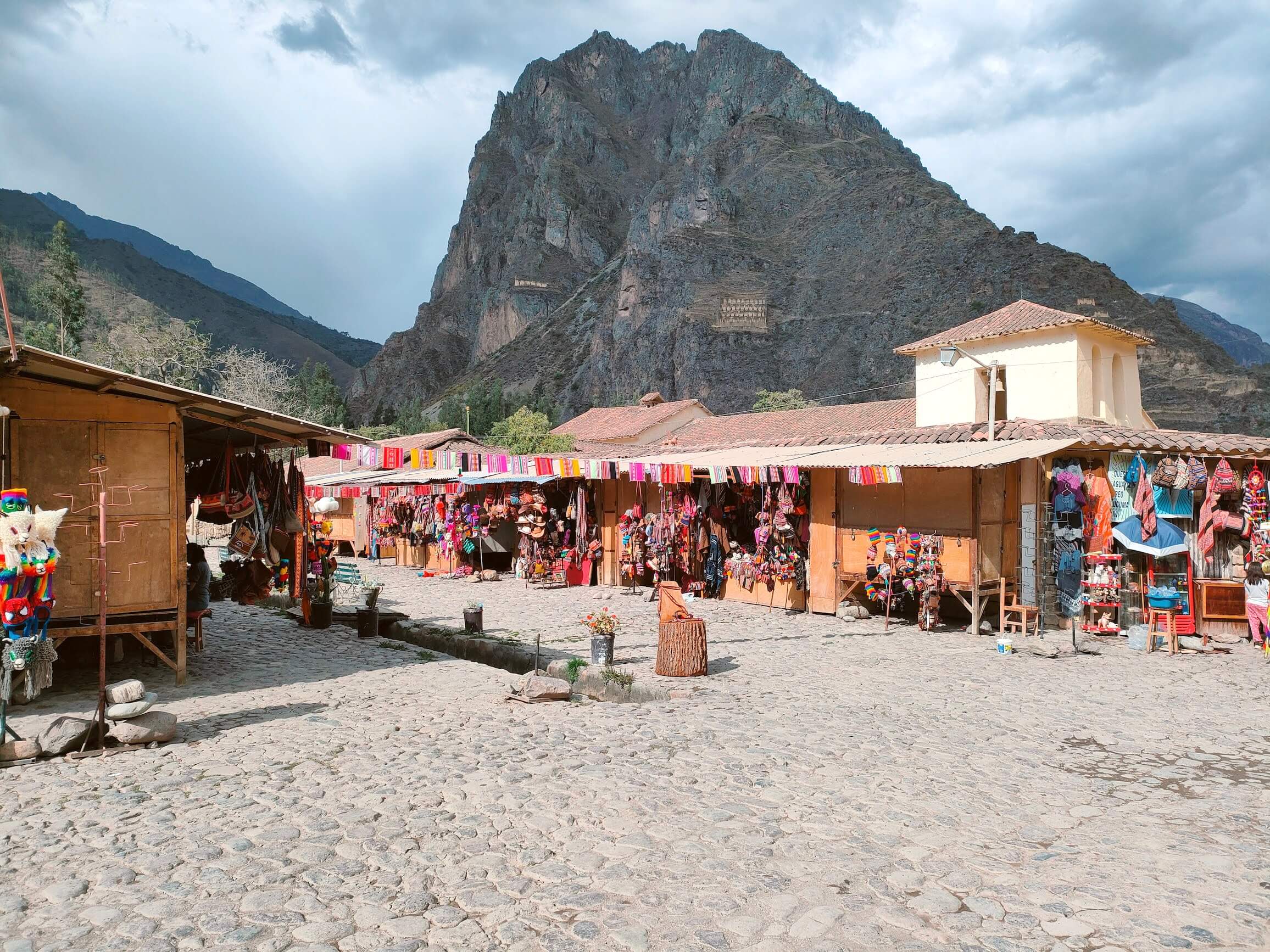
Souvenir Market in Ollantaytambo
Our last stop is Pisac. Pisac is very large.
It is located in the mountains, a very picturesque place.
The guide said that to visit Pisac properly, you need almost the whole day.
We arrived in the evening.
All the paths up to the main ruins had already been closed to visitors.
We saw almost nothing.
We only managed to reach the mountain that had many round openings.
The guide said that in these openings the Incas hid people, along with valuables.
Everything was looted and now it is empty…
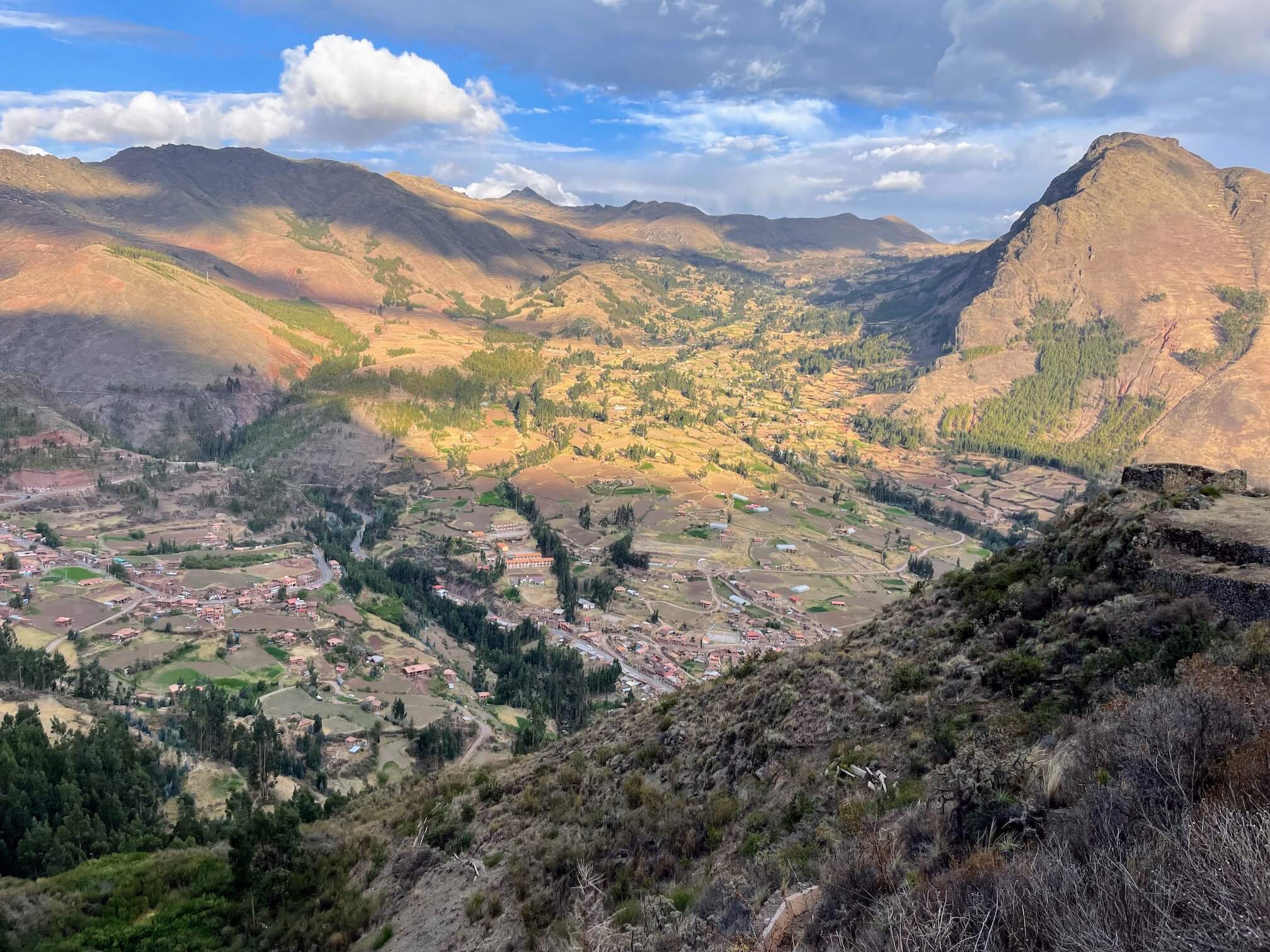
Views in Pisaq
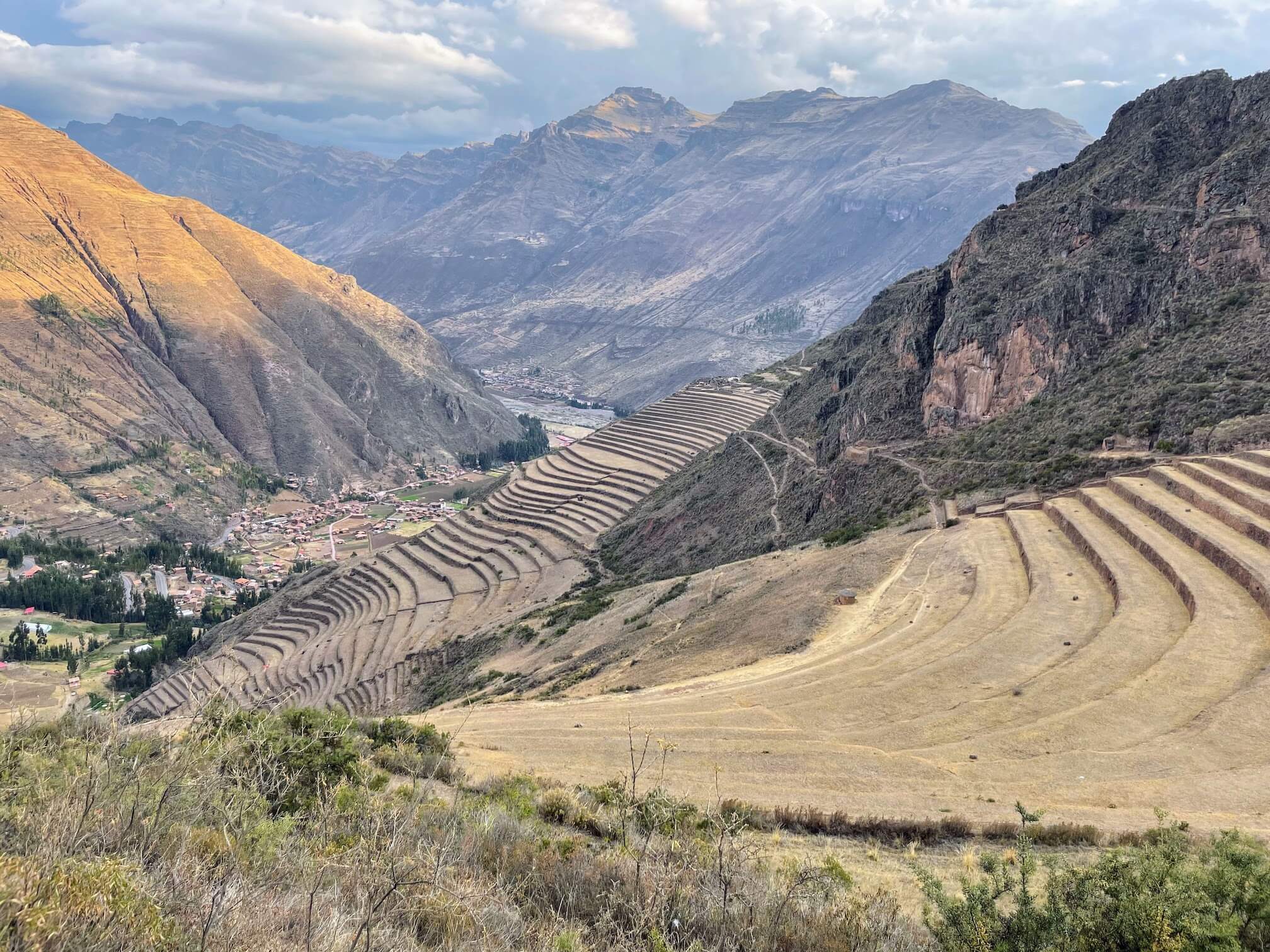
Agricultural terraces again
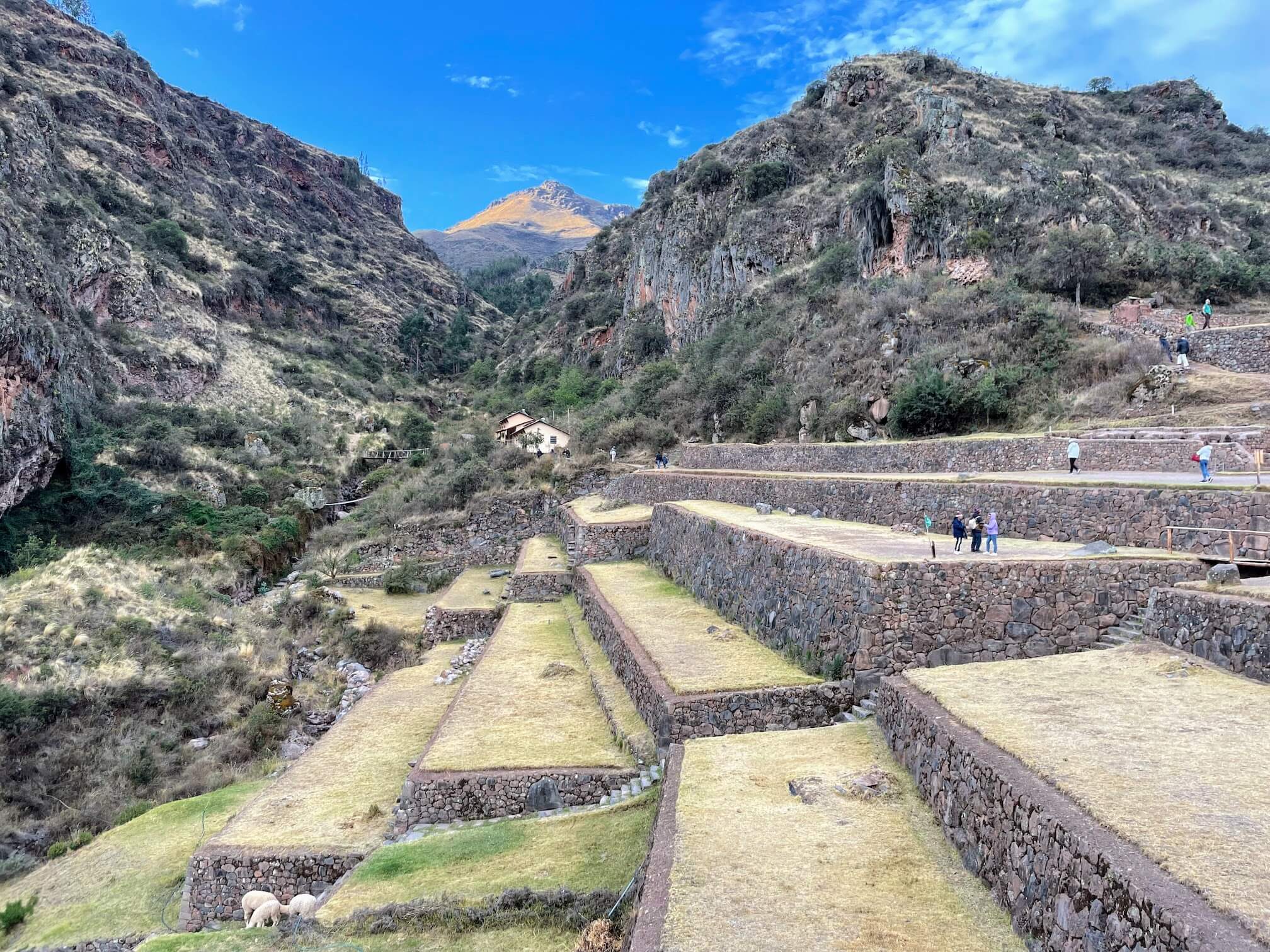
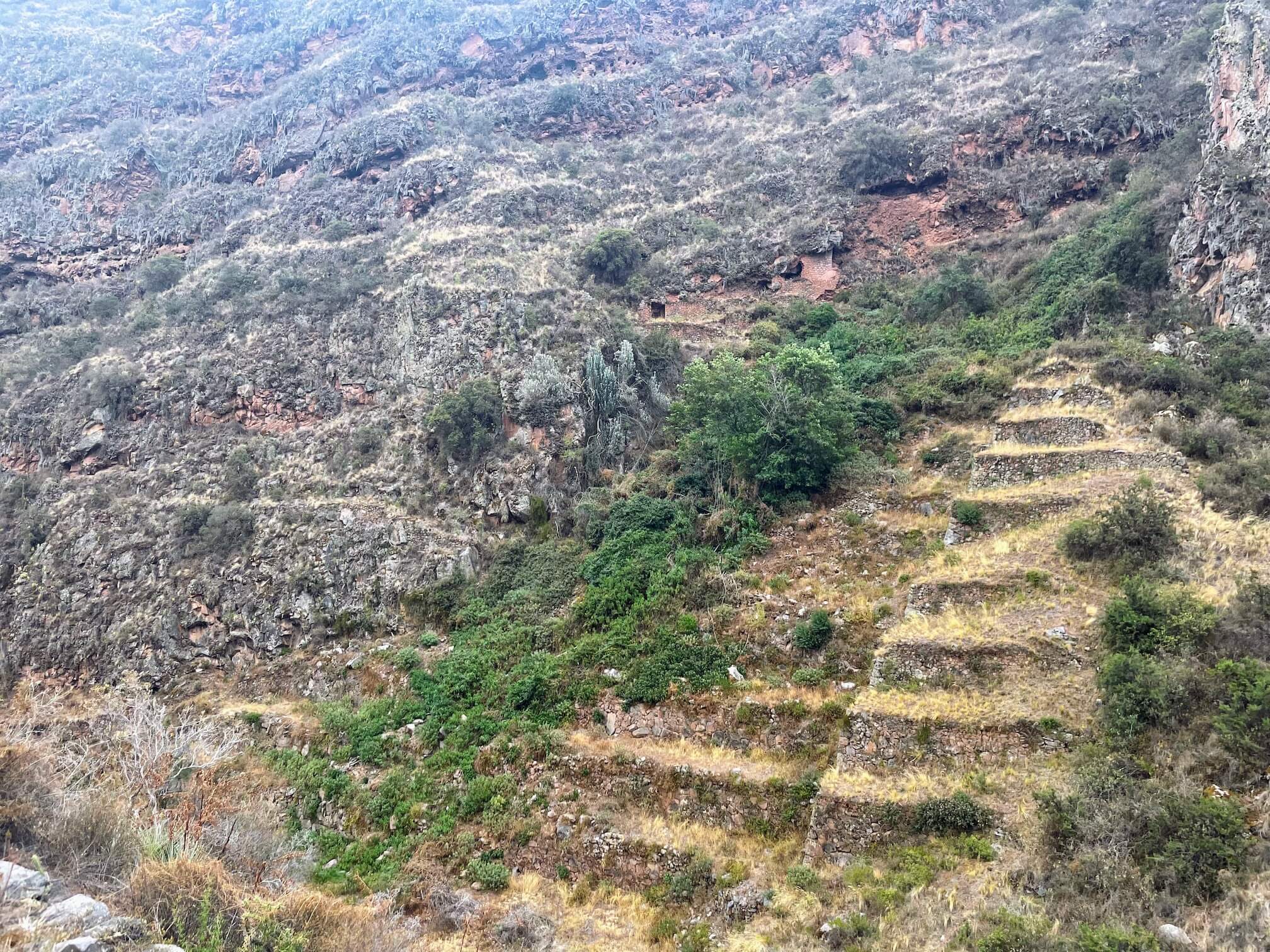
The holes in the mountain are hard to see in the photo
We returned home late.
We ate some soup and went to bed.