Asia 2016

Day 39, February 26

Mandalay

Asia 2016

Itinerary

Breakfast at the hotel, as usual, was until 9 a.m., so we had to get up early. Breakfast didn’t really please us — there wasn’t much to eat. It’s such a strange feeling — when there’s lots of food, all kinds of noodles, soups — but you don’t actually want any of it. I can’t imagine how people can eat that in the morning, but almost everyone does somehow. Volchiy found the last two fried eggs, and we made ourselves toast with jam.

After breakfast we rented bicycles — they’re free at the hotel here. The bikes are old, without gears, but they do have brakes.

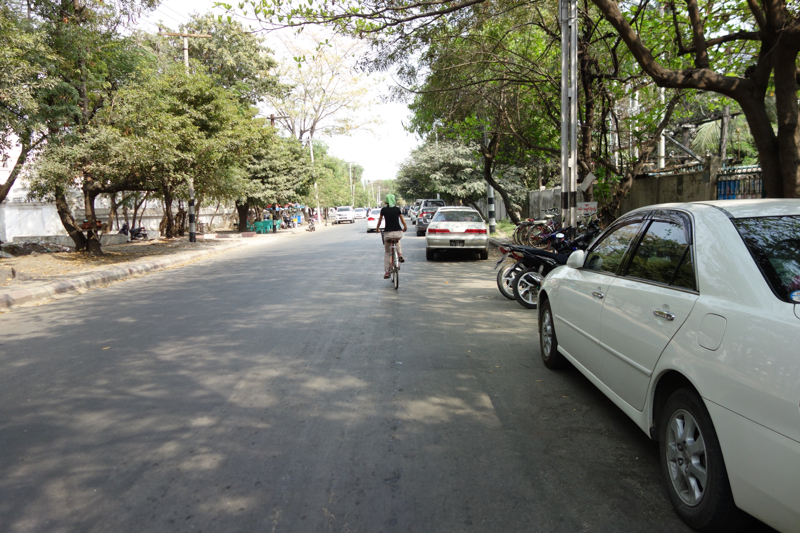
The roads in Myanmar are chaotic, many intersections have no traffic lights, and the boldest people go first. But in principle, cycling turned out to be even better than I had thought. Soon we got onto a wide avenue with as many as three lanes and fewer cars — riding there was an absolute pleasure.

We started with a visit to the royal palace. Admission costs a hefty 10 dollars, but this ticket also allows you to visit other sights in Mandalay and the surrounding area. The palace is surrounded by beautiful walls and a moat with water. Each wall is 2 km long — inside is a huge area. But only part of it is occupied by the royal palace — the rest is made up of some barracks resembling military housing or just ordinary people’s homes.

Royal Palace - cottages

Royal Palace - cottages

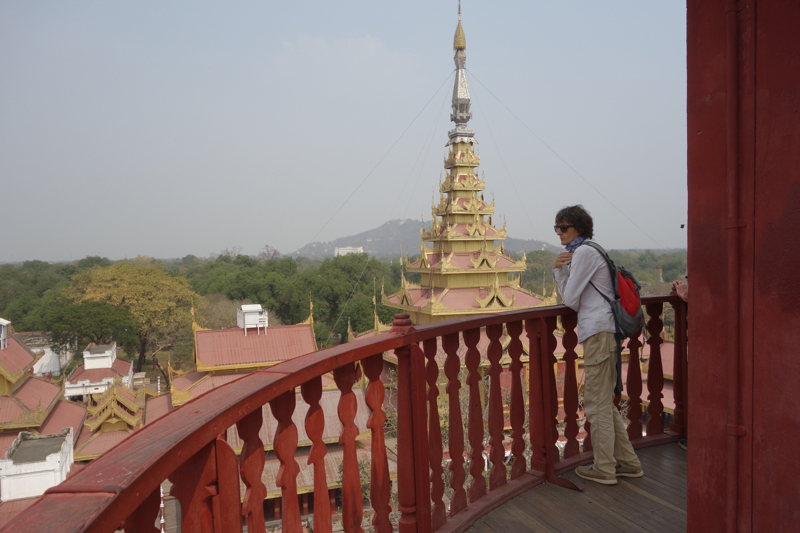
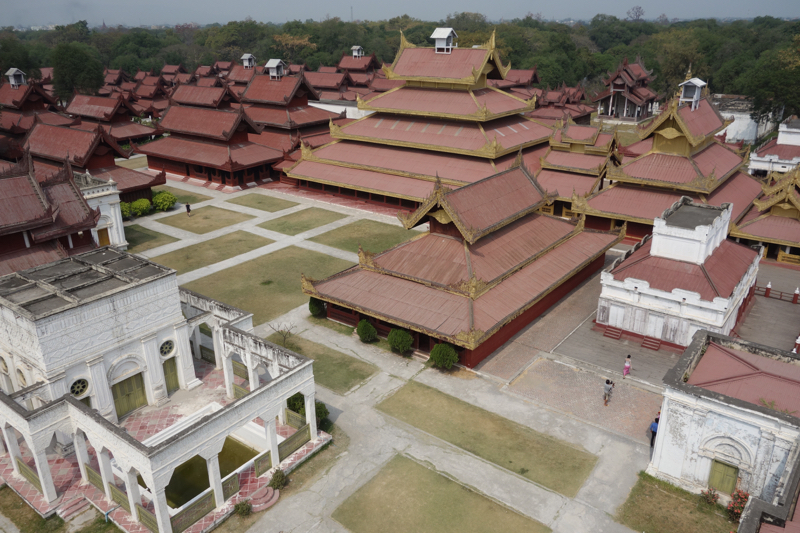
The Royal Palace was almost completely destroyed during World War II, and in the 1990s a copy of what once stood here was built. There are many similar wooden houses here. This is what the Royal Palace looks like from above, from the observation deck — almost like a toy.

We are at the observation deck. The spire of the Royal Palace tower.

We are at the observation deck. The spire of the Royal Palace tower.

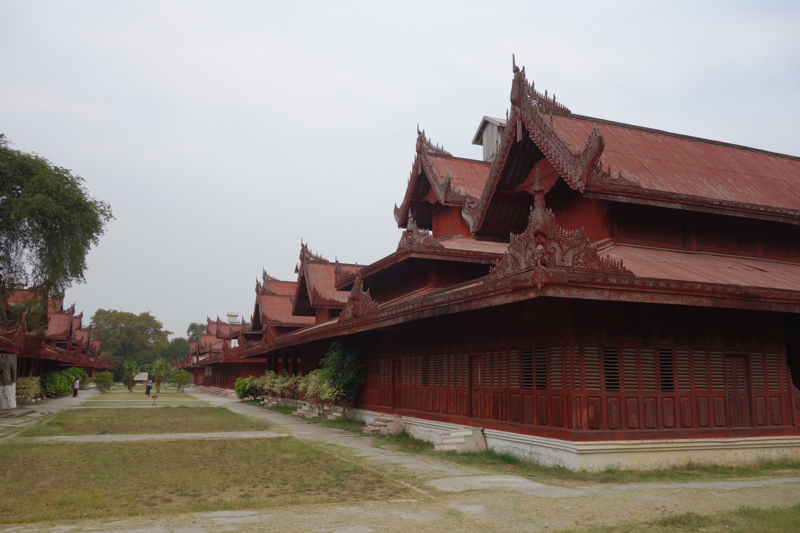
The cottages up close

The cottages up close

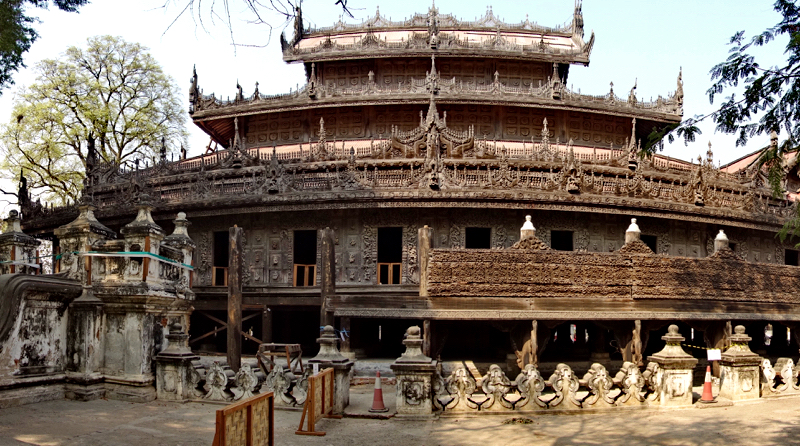
While we were walking, a light drizzle started. After the palace, we decided to go to the Shwenandaw Monastery — it is the only structure from the royal palace that survived the war and has been preserved in its original form. Now it has been moved a couple of blocks away from the palace itself. I really wanted to see it, because the few photos I had seen fascinated me.

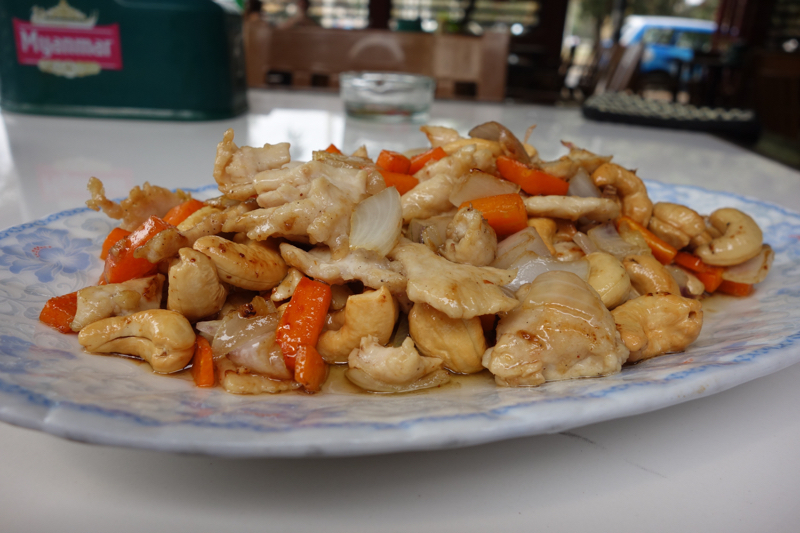
But to let it all sink in better, we decided to grab a bite, and it would also be nice to wait out the rain somewhere. We went into a café and ordered rice and chicken with cashew nuts — we had eaten something like that a couple of times in Thailand. Everything here was tasty, but unlike in Thailand, the chicken with nuts was just dry, without the sauce that they served everywhere in Thailand.

Chicken with cashew nuts - they didn’t skimp on the nuts.

Chicken with cashew nuts - they didn’t skimp on the nuts.

By the time we finished eating, the rain had stopped and the sun even came out. We got on our bicycles and rode to the monastery.

Going to the monastery

Going to the monastery

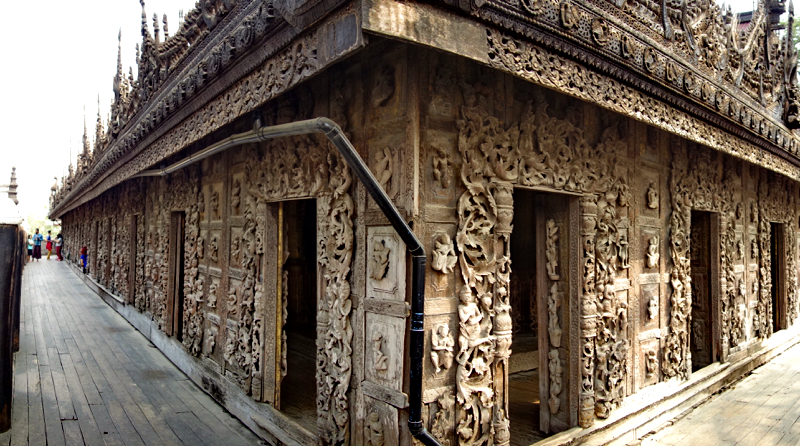
This house is now called a monastery, but in the past the king himself lived there. The house is entirely built of teak, and it is completely wooden. The sight is truly amazing. When I told Volchey about it, he was somewhat skeptical, but when he saw it with his own eyes, he was simply amazed. He kept walking around it and saying, “Wow, what a house.”

The teak house amazes the imagination

The teak house amazes the imagination

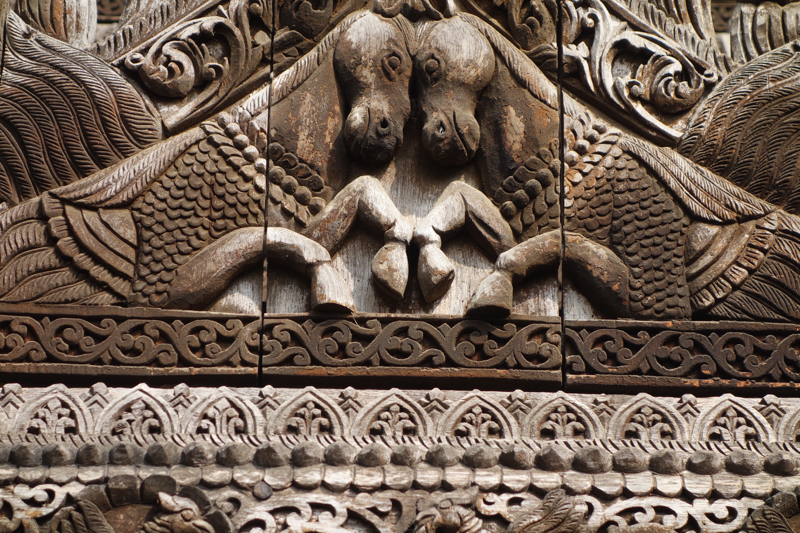
I can’t imagine how much time it must take to carve all this out of wood — there are so many tiny details, it’s simply mesmerizing — the girl’s hair, the horse’s mane, the bird’s feathers, the flower petals, the expressions on the warriors’ faces…

The tiniest details

The tiniest details

Home

Home

Some of the figures have already grown very old, and the outlines of what they once were are barely discernible. In some places, you can see that new figures have been attached — apparently to replace the very old ones. But the new figures are made just as skillfully, so you can tell they are new only on closer inspection. Otherwise, the house is simply steeped in antiquity: creaking wooden doors, cracks in the wood washed by years of rain. Inside the house, everything is wooden too — teak columns, a carved ceiling.

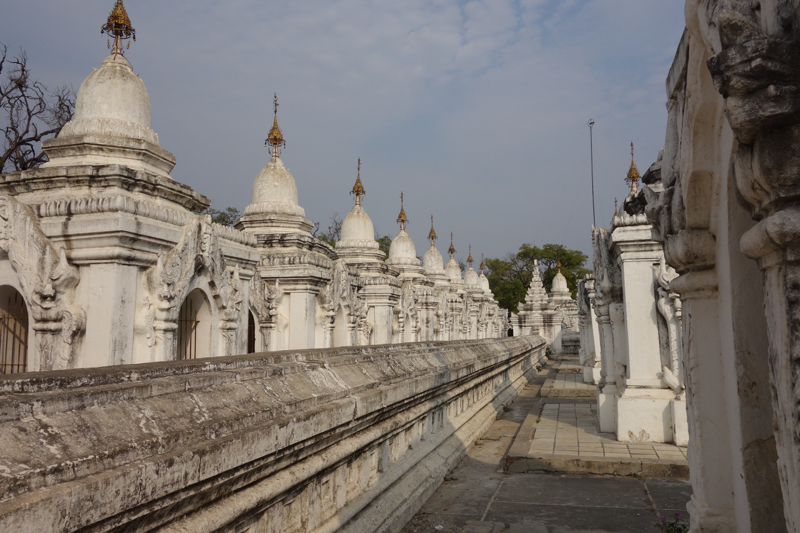
After the teak house, we had less and less energy left, but we briefly stopped by the unremarkable monastery building next door and then went to two pagodas, one of which was called “The Biggest Book in the World.” At first I misunderstood the name and thought that some kind of huge book was kept there, and then it turned out….

"Pages" of Buddhist scripture

"Pages" of Buddhist scripture

Around the gilded stupa there are about 800 small white “towers.” In each one stands something like an obelisk, on which a part of Buddhist scripture is carved. And so in each little tower there is an obelisk with a page from a Buddhist book written on it, and together they make up a book — which is why it is the largest book in the world.

Completely exhausted, we rode back home. How good it is that we are on bicycles — I can’t even imagine how to get around all this on foot. Everything is so vast, and on the map it seems close by — but in reality everything is very far indeed.