Asia 2016

Day 41, February 28

Inwa-Sagaing U Bein Bridge

Asia 2016

Itinerary

Right after a meager breakfast, we rented a moped and set off to explore the area around Mandalay. We decided to start with the town of Inwa, where there once was a prosperous kingdom.

We turned off the wide road onto a narrow unpaved path, where Inwa began. It was a real village; apparently tourists had never been seen here, because people looked at us as if we were aliens.

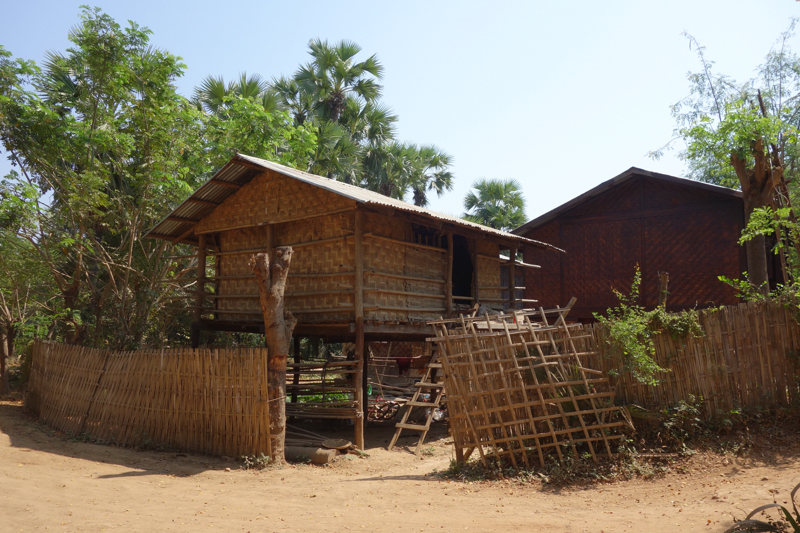
Myanmar houses made of woven bamboo

Myanmar houses made of woven bamboo

They all live in such strange houses, where the walls are made of woven bamboo mats. The houses are small; it seems to me there are no partitions inside, and probably they all just sleep together on the floor…

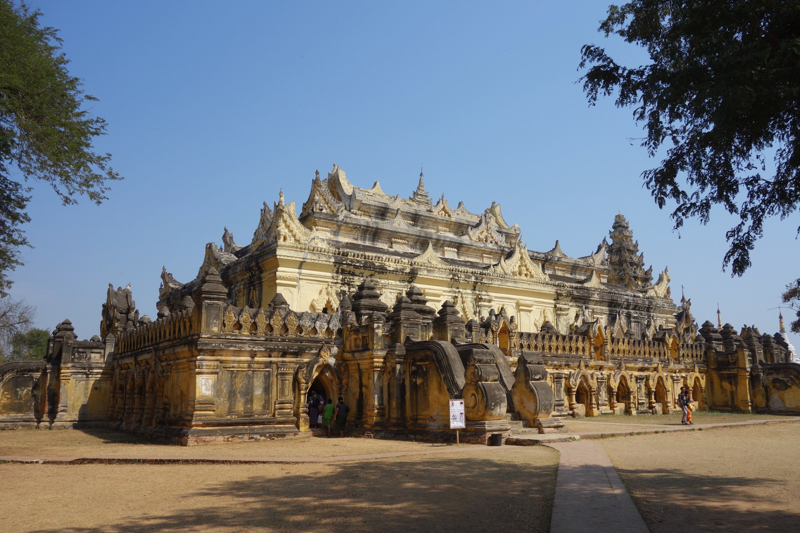
First we went to a 19th-century monastery, built of stone with many carved decorations. Beneath the monastery are dark tunnel-corridors with bats.

Stone Monastery

Stone Monastery

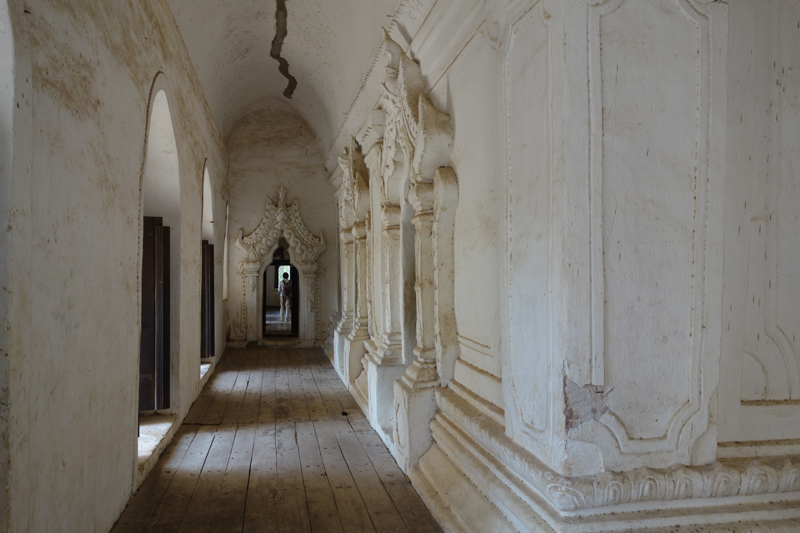
Inside the monastery

Inside the monastery

Then, along a narrow road through rice fields, we drove to another monastery.

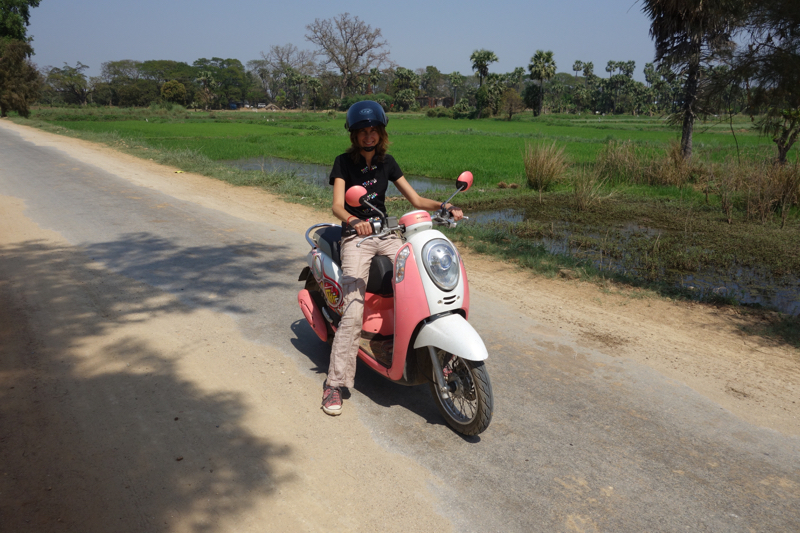
On the way, Volchiy decided to teach me how to ride a moped. For some reason, at first it was very scary (apparently the memory was still fresh of how I crashed a moped into a fence in Bali…), but I remembered Kurt Vonnegut’s words that every day you should do what you fear, and I set off…

I’m on a moped. I’m still very scared.

I’m on a moped. I’m still very scared.

My fear gradually receded, and I was already riding straight calmly, then even carried Volchy around a little. On the moped, riding two-up was even easier than on the electric bike in Bagan. Volchy said that he wasn’t even afraid that I was driving.

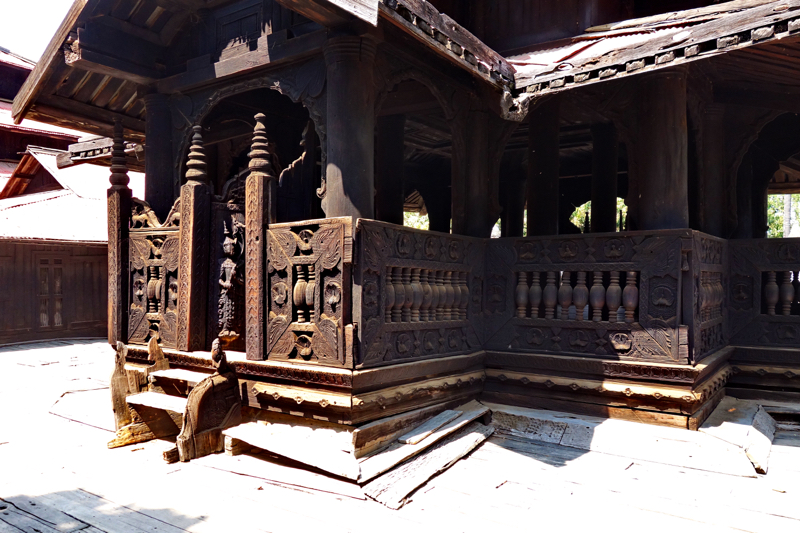
And so we arrived at the old monastery built of teak.

Part of the monastery with carved details

Part of the monastery with carved details

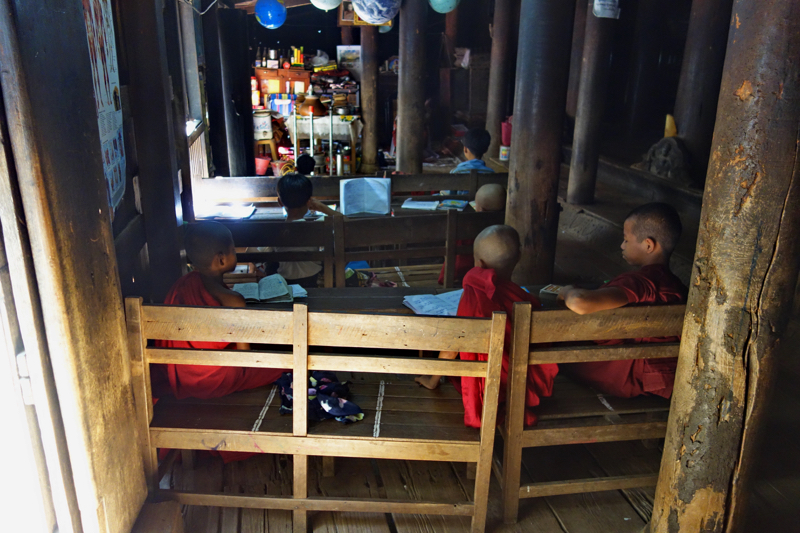
It very much resembled the magnificent monastery we had seen in Mandalay. There were far fewer carved details and decorations here, but it was still beautiful and equally steeped in antiquity. The wood had darkened and cracked, and it smelled of an old attic and dust. In the left wing of the monastery there was a school for young monks — here hung globes, a world map, posters about how the human body is built, and the English alphabet.

Little Students

Little Students

The little monks sat at their desks and studied their lessons.

After that, they headed farther along the unpaved road into the fields - toward the ruins.

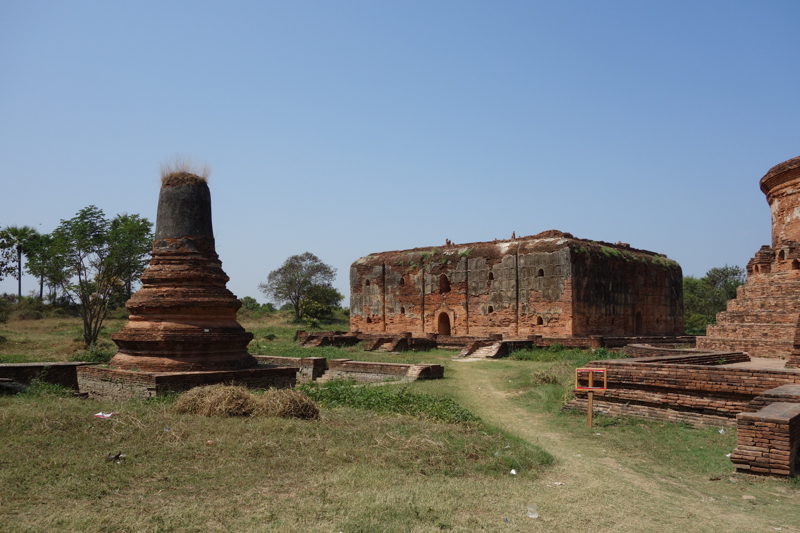
Ruins in the middle of a field

Ruins in the middle of a field

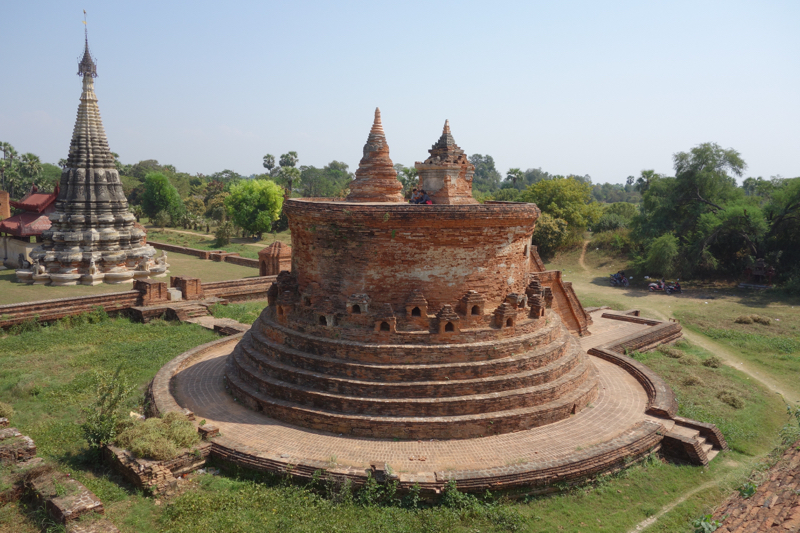
There we were met by an entire small complex of old stupas overgrown with grass and several rectangular buildings. In one of them, we barely found a hidden staircase and climbed up.

View from the roof of a rectangular building

View from the roof of a rectangular building

There were no tourists here at all anymore (unlike the first two monasteries, where we did still come across white people, but all of them were in taxis and with guides. It seems we were the only ones who made it here by moped.)

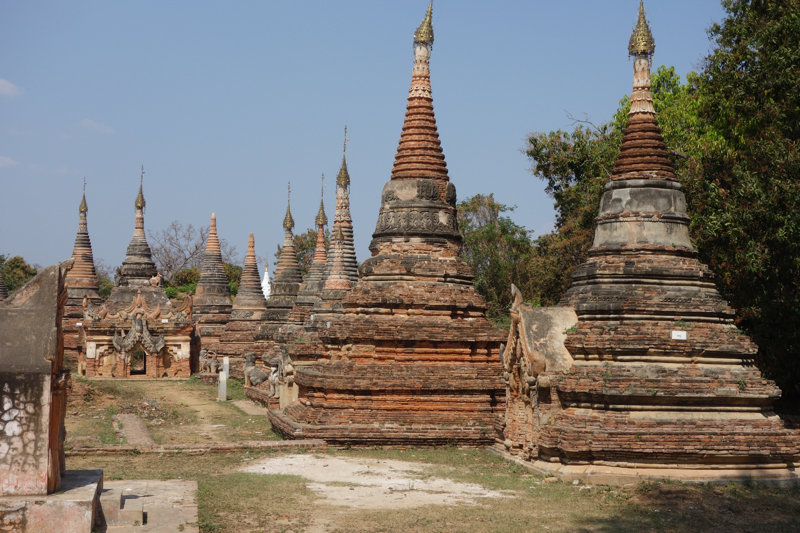
Now we had to get back to the main road, but we took a different route, where surprises awaited us in the form of old pagodas not even marked on the map.

Many antique mortars

Many antique mortars

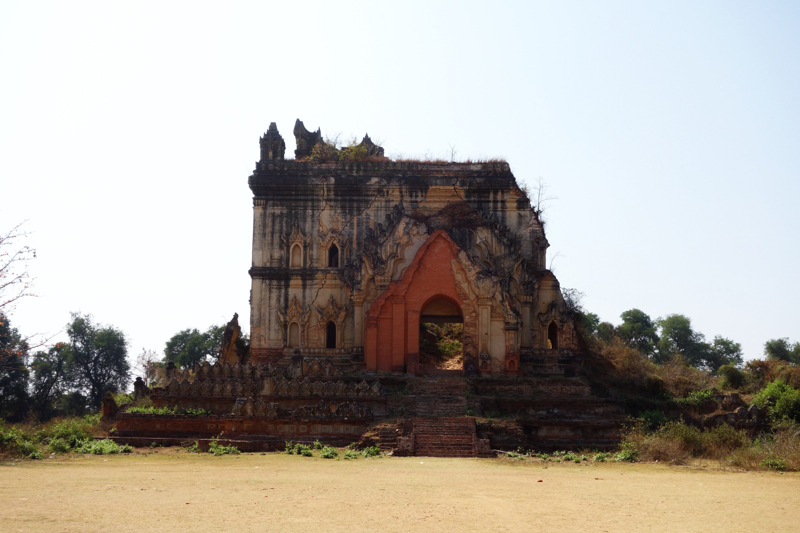
By this point, I was very hungry. We were driving when I suddenly noticed an amazing building. It stood right in the middle of a field, with local kids playing soccer nearby; it seemed to have appeared out of nowhere.

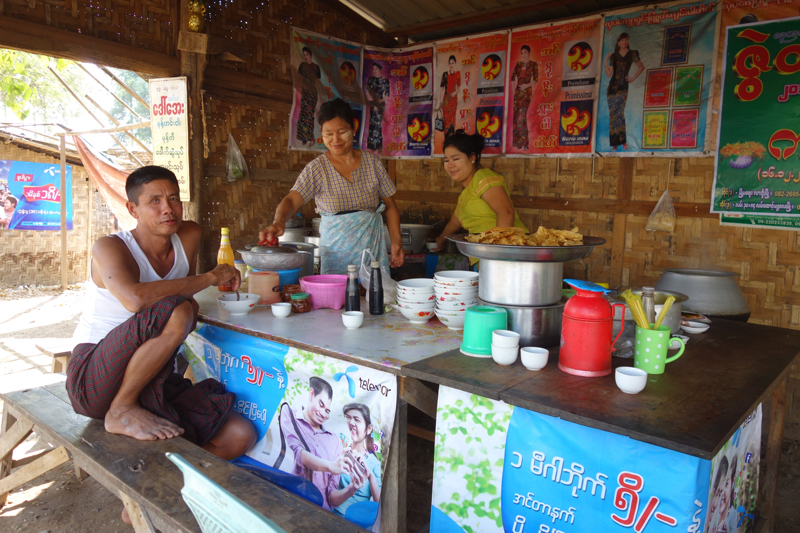
Along the road near these ruins there were several local cafés, so we decided to grab at least something to eat and then go explore the ruins.

Local "cafe"

Local "cafe"

The locals were eating something. We stood there, watched what the hostess was preparing, and ordered “the same as that little man over there.”

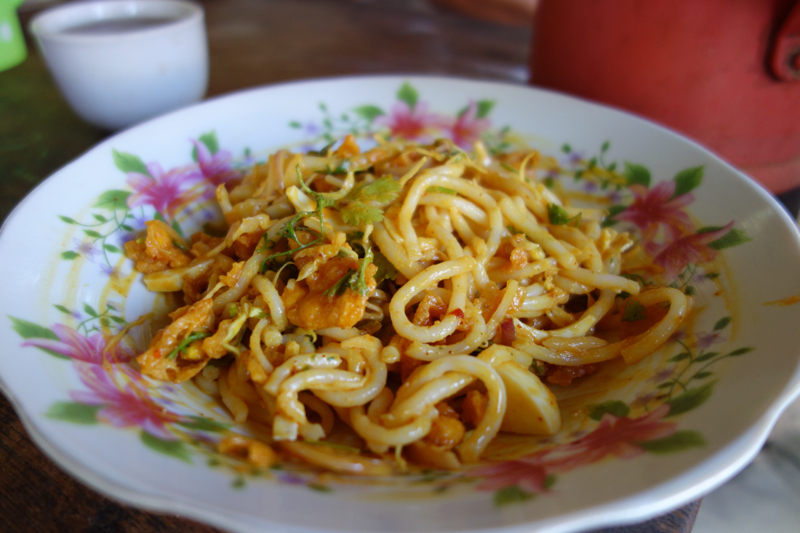
Our surprisingly delicious food

Our surprisingly delicious food

It was a vermicelli salad with some kind of sauces, a boiled egg, and crispy flatbreads - the hostess skillfully combined everything, mixed it all together, and this is what the dish turned out to be. It also came with a warm soup - everything turned out to be tasty and very cheap.

An amazing building

An amazing building

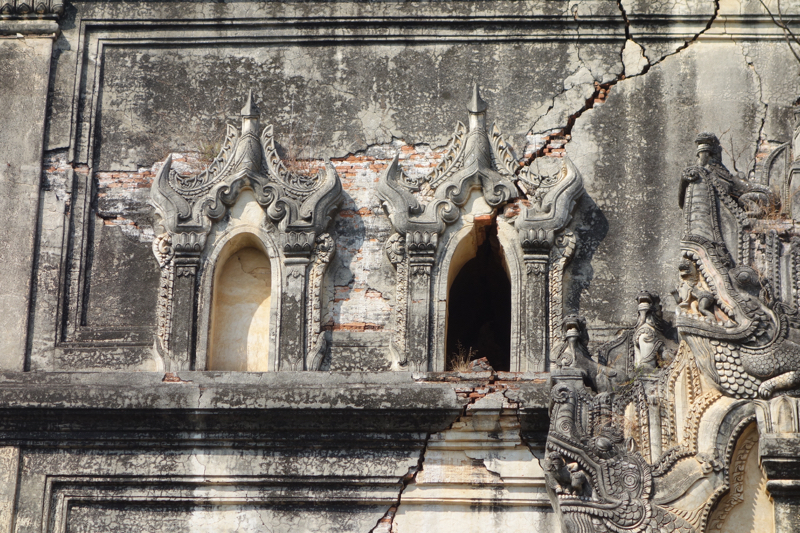
The building, probably a temple, there is almost no information about it online, is in a very poor condition. On the other hand, it has completely collapsed, but amazing patterns are still preserved on the remaining walls.

Cracks and beautiful stucco on the walls

Cracks and beautiful stucco on the walls

Perhaps not much time is left for this once-grand structure. Even now, despite the cracks and fallen-off pieces, it still looks very majestic, but its days are numbered…

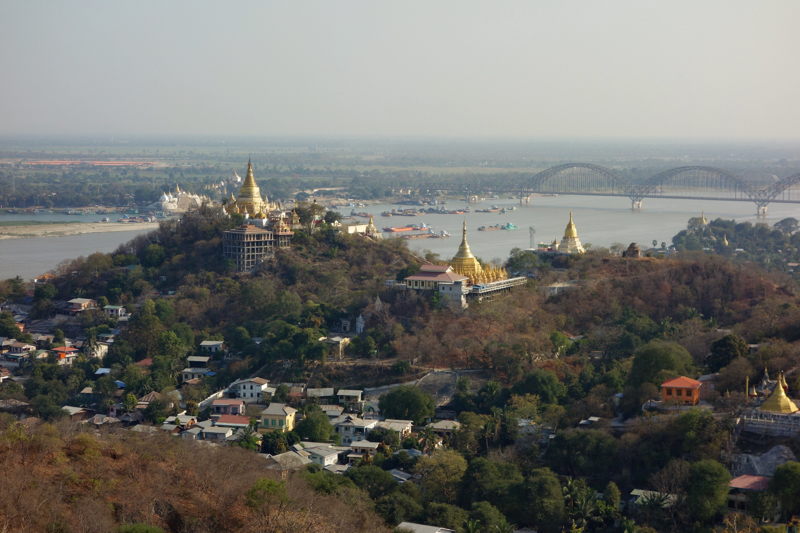
Now our route led across the river to the city of Sagaing, where many stupas and monasteries are set among the hills. The view of Sagaing from the bridge is simply magnificent — the scattered golden spires of pagodas among the hills are impressive. It’s a pity we don’t have such a photo — on the way there we passed the spot where one could stop before the bridge, and on the way back we didn’t find such a place.

Sagaing, view from the hilltop observation deck

Sagaing, view from the hilltop observation deck

The view from the bridge impressed me much more than Sagaing itself. We rode our moped all the way to the top of the hill, where there was also a pretty good view. A large stupa and a Buddha were located there as well — everything around was decorated with tiles on the floor and bits of glass on the walls.

While we were sitting and resting, a young Myanmar guy came up to us. He said he was practicing English and wanted to talk to us. English in Myanmar is something else entirely. They distort the pronunciation so much that it’s very hard to understand them, and at the same time, if you speak correctly yourself, they don’t understand you (I only remember hearing perfect pronunciation from a Myanmar man once — it was the guide for an elderly couple, probably Americans, in Bagan).

We managed to chat with that guy somehow, but he still couldn’t understand my question about how many years they study at school. He told us a little about himself: that he works in a bank and has six brothers and sisters. It would have been interesting to talk to the local people; we even had some questions prepared for them (for example, why they buy tea in little bags) — but, alas, there’s no escaping the language barrier…

Then the adventures began. We went to see the famous attraction, the 1.2 km-long teak U Bein Bridge across the lake. According to the map, there were two roads leading there — one was the one we had already taken, and of course we decided to take the other road, the one we hadn’t been on yet.

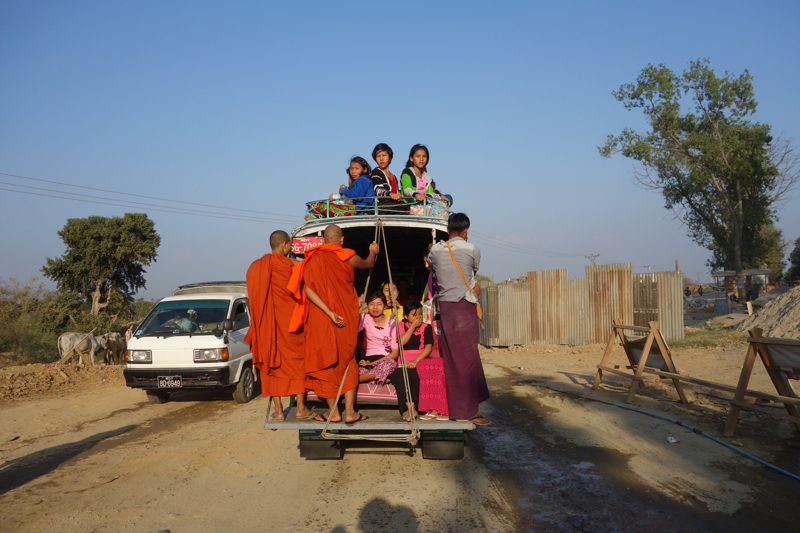
These are the kind of minibuses you see in Myanmar

These are the kind of minibuses you see in Myanmar

At first we couldn’t turn onto the road we needed because it turned out there wasn’t an intersection there at all (as we had thought from the map), but rather one road passed over another — we had to detour through some packed villages and fields. We kept driving and driving; the road had long since become unpaved, and on top of that it was narrowing with every meter. But surprisingly, we still made it out where we had planned.

Then we turned off in hopes of crossing the railway tracks, but the crossing there turned out to be barricaded by a pile of trash. Naked children were running around everywhere, shouting “Hello hello!” It was already getting quite late, and we might not make it for the sunset we had planned. We had to detour again (this time it wasn’t so bad). In the end, we got onto the final stretch — we were about to see the famous bridge.

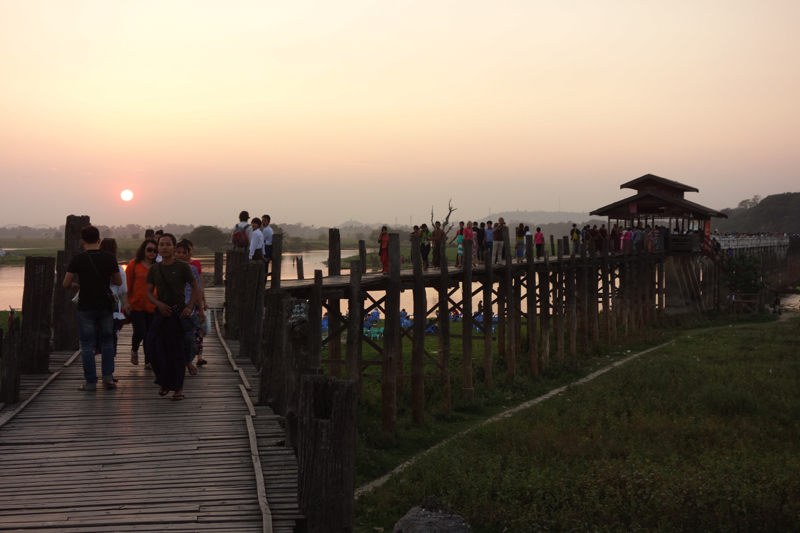
Of course, everything turned out not at all like in the photos. The bridge is good, of course, no doubt about it — we had never seen anything like it anywhere. But there were sooooo many people there.
I can’t appreciate anything properly, even the most beautiful sight, if there are too many people and my freedom of movement is limited. I feel very uncomfortable if I can’t go where I want and at the pace I like. Here everyone was moving in a single file, and it was even difficult to stop and take a photo.

Sunset on the Bridge

Sunset on the Bridge

Besides, I was very tired for some reason. It was as if I had run out of free space for impressions, and I didn’t feel anything special. I wonder if other people get tired this quickly too. In the mountains I can walk all day; of course I get tired, but it’s not that kind of tiredness. Perhaps there are too many impressions here and the brain doesn’t have time to process them all.

But we made it just in time for sunset. It was beautiful here, and the sun seemed enormous.