Asia 2016

Day 50, March 8

Inle Lake

Asia 2016

Itinerary

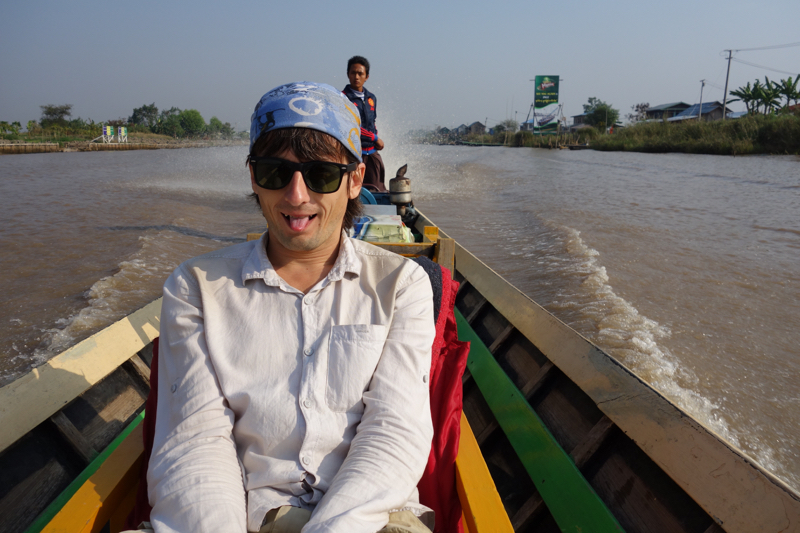
The boatman, as promised, was waiting for us at the hotel entrance at 8 a.m. We went with him to the second pier, got into the boat, and sped off. In the morning it was cool and windy in the boat, and on top of that we got some very fast boat — we were overtaking everyone. The tourist boat is equipped with fairly comfortable seats, and there was even something like a blanket to wrap up in and keep warm from the morning chill.

Three in a boat, I’m out of frame, the boat driver is in the background

Three in a boat, I’m out of frame, the boat driver is in the background

First we went along the canal to the beginning of the lake, and then the lake began. It is very wide - so the shores are completely out of sight, we were sailing roughly in the middle.

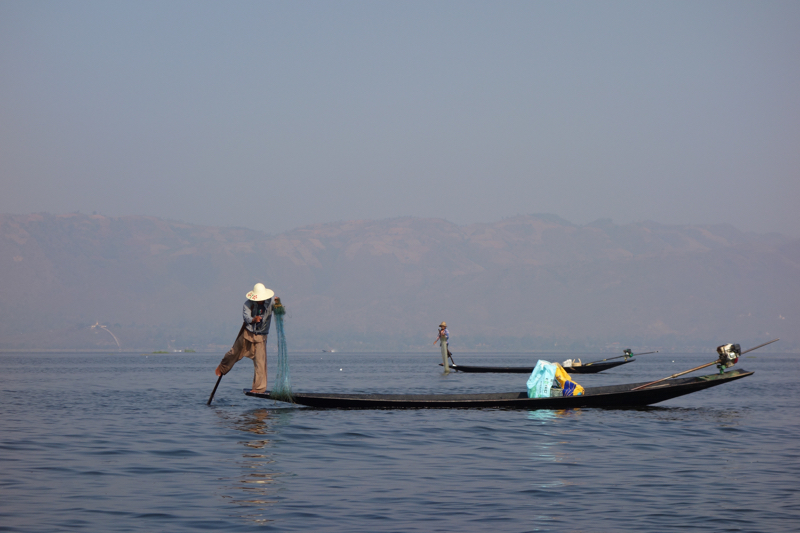
The lake is very shallow, it seemed as if there were only about 10-20 centimeters to the bottom. We passed fishermen who row, holding the oar with one foot, and with both hands holding a net. There is a lot written about these fishermen on the internet, and there are many beautiful photos. These “one-legged” fishermen, as they are sometimes called, have become almost a hallmark of the lake. I was surprised that they really exist. And also that they are ordinary people who actually catch fish this way, rather than just posing for tourists.

Fishermen on Inle Lake

Fishermen on Inle Lake

Then the driver took us to a “factory” of silver items. Here by the lake there’s a local thing like this — small factories where they make all sorts of things and show tourists the production process, hoping that someone will buy something. They say these boat trips aren’t all that expensive overall (a boat ride costs $20 for a whole day, per boat) because the drivers here get some percentage of their passengers’ purchases. Well, our driver clearly wasn’t lucky with us in that respect.

At the small improvised jewelry factory there were lots of pieces, but they all looked a bit suspicious. I only liked one pair of earrings called “full moon,” in the shape of a circle.

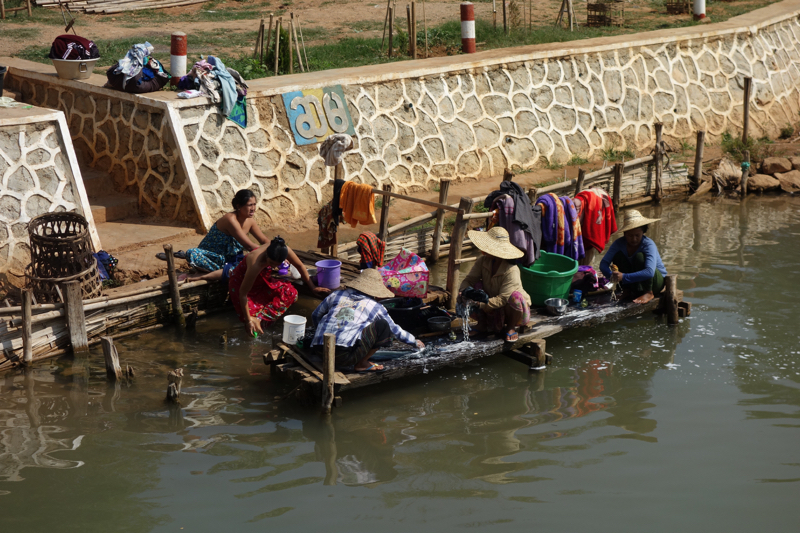
Then the driver took us (at my request) to a remote corner where there are many ruined pagodas. The pagodas are in the small picturesque village of Indein. There was a big wash on the pier. Everything connected with water is done in the lake (or canal) — people do laundry, bathe themselves, bathe cows, wash mopeds, and even brush their teeth.

Big Wash in Indeyne

Big Wash in Indeyne

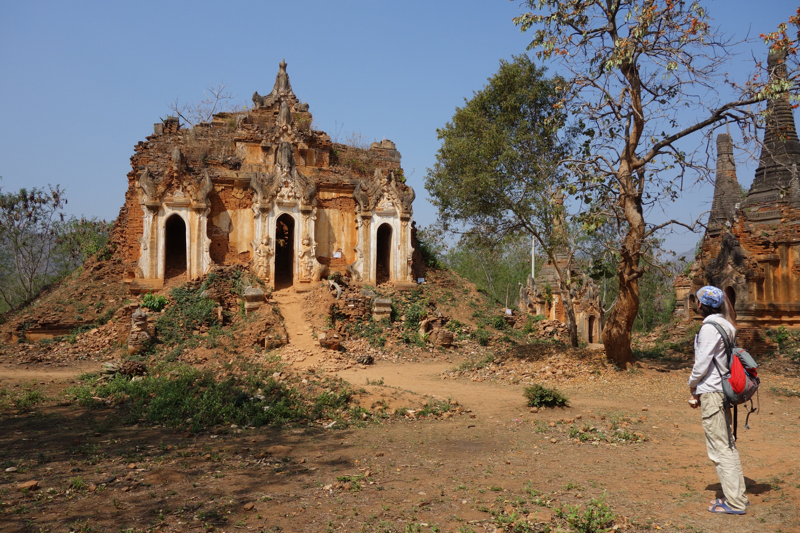
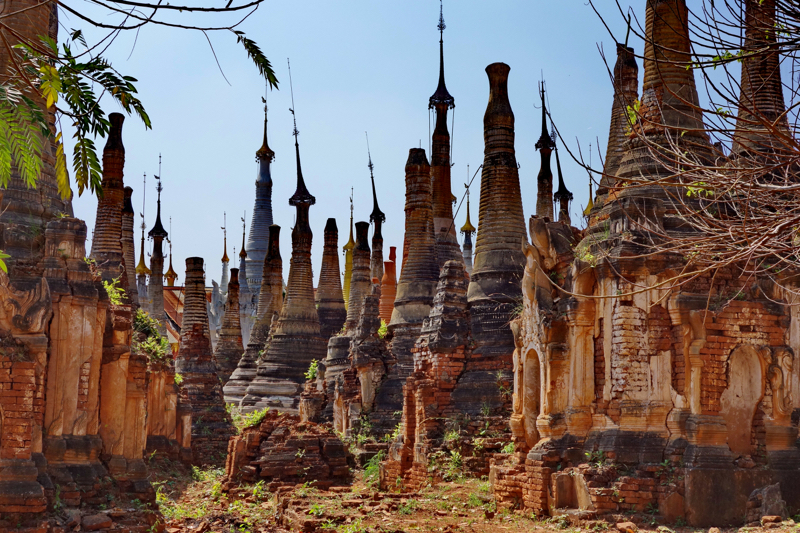
I really liked Indein; there are indeed many amazingly beautiful pagodas here — they are even much more beautiful than in Bagan. All the pagodas are in a very ruined state. It is believed that they were built in the 13th century, and only a little over a thousand pagodas have survived.

One of the ruined temples in Indein

One of the ruined temples in Indein

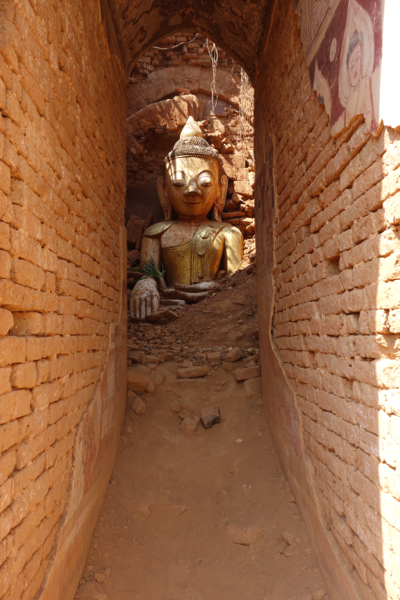
In one of the ruined temples, a gilded Buddha still sat there, half-buried by the collapsed roof. The pagodas are so beautiful and there are so many of them that even after Bagan they are still impressive.

Buddha buried under the temple roof

Buddha buried under the temple roof

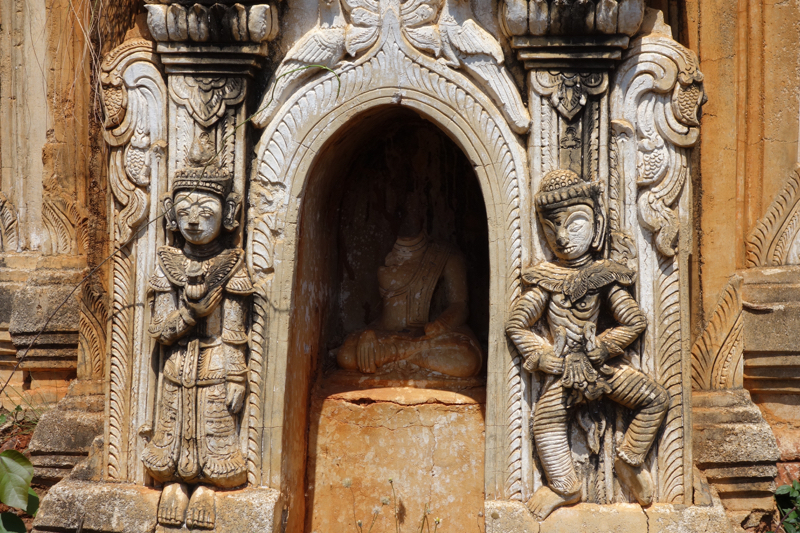
Decorations on old stupas

Decorations on old stupas

Old stupas in Indein

Old stupas in Indein

New pagodas were built on the hill, and a staircase leads up to them, along which there are many souvenir vendors. Some of them are simply unbearable — I only asked one woman vendor how much the earrings cost, and after that she chased us for a long time, grabbed my hands, and begged me to buy them at a discount… Among the souvenirs there are some very amusing items in the form of Naga tribe hats, the tribe that lives far in the north of Myanmar; old coins (probably silver ones, the coin’s weight in grams is stamped on them and “piastres” is written); old clocks in glass spheres.

We bought a wooden fish slingshot. I don’t know why, but Wolchiy really liked it. The seller first named a price of 5 dollars, and then when she lowered it to 2, Wolchiy couldn’t resist and we became the owners of a very funny fish-shaped slingshot.

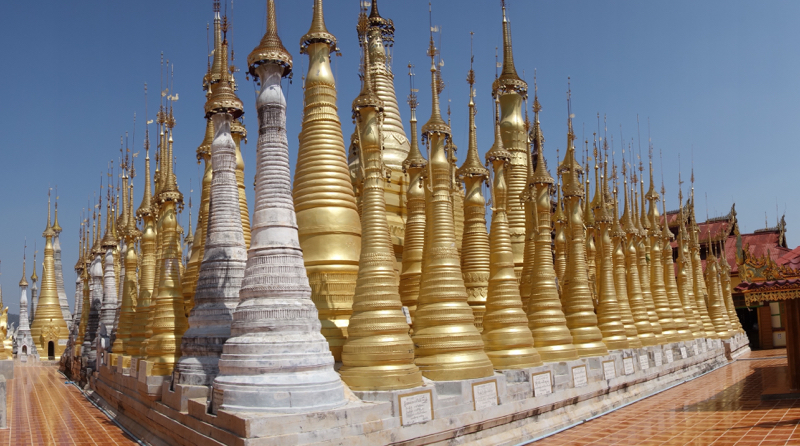
The new pagodas somehow don’t impress nearly as much. I really liked the sound of the little bells — it was especially beautiful here because it was completely quiet, and we were alone. A light breeze swayed the bells on top of the pagodas, and they all rang in different tones, but at the same time, which made the ringing so multifaceted.

New stupas with bells on top

New stupas with bells on top

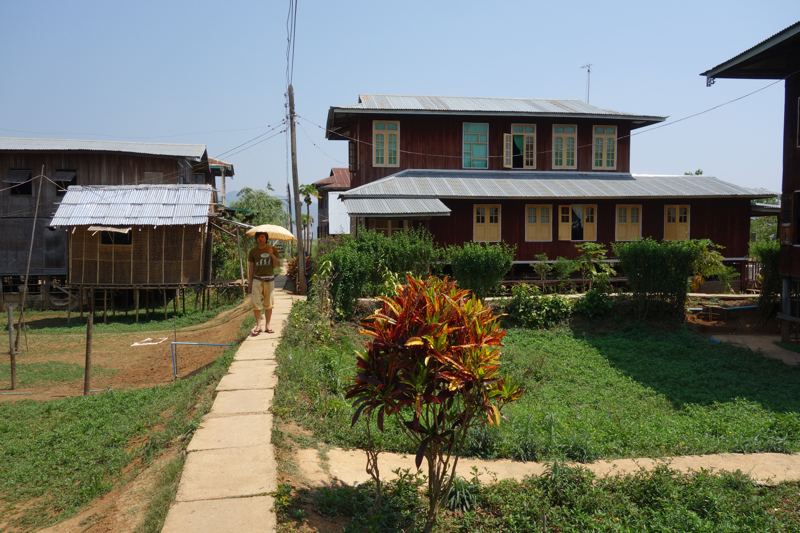
After Indein, we were taken to a house where a Myanmar man made paper umbrellas. It was not very interesting, but we were able to walk around the village. The houses here are very different: some are very poor, made of bamboo, even without windows, while others are wealthier — wooden, multi-story, even beautiful.

A village in the middle of a lake

A village in the middle of a lake

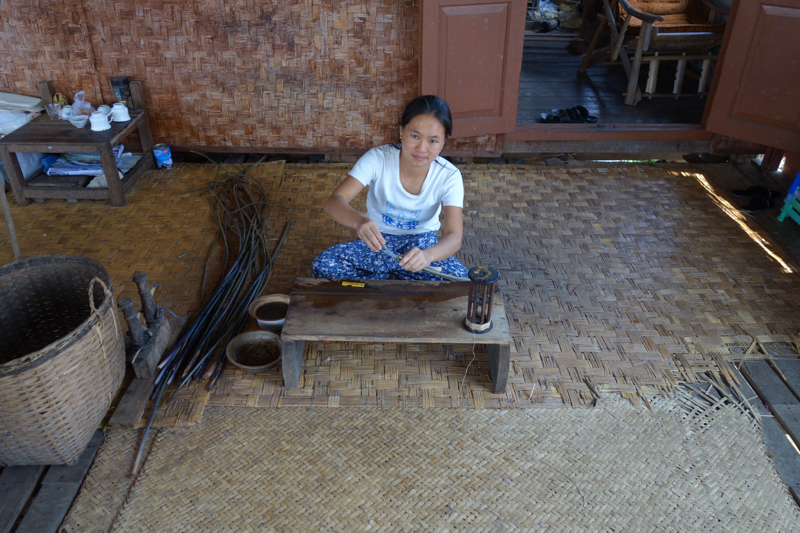
The next stop on our cultural program was a small factory producing thread and fabric from lotus stems. The girl said that such fabric is made only here, on Inle Lake (I don’t know how true that is). It is a very labor-intensive process, so all items made from this fabric are very expensive.

We then saw various lotus products, a small scarf measuring 20 by 100 centimeters cost 75 dollars. The same girl said that to make it, 4,000 lotus stems and 20 days of a craftsman’s work are needed. The lotus scarf looked quite strange, very much like ordinary burlap — both in color and texture — you would never guess that it costs so much.

A worker deftly extracts thin threads from lotus stems

A worker deftly extracts thin threads from lotus stems

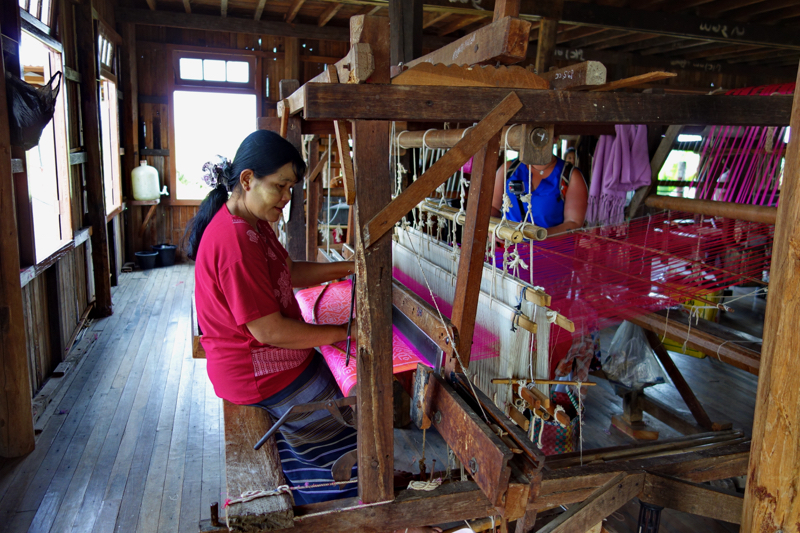
In a separate large hall, many Myanmar women of different ages were sitting and weaving fabric on looms — an enthralling sight. They did it so skillfully, the cloth was simply being born before our eyes, some even with patterns.

In the weaving "shop"

In the weaving "shop"

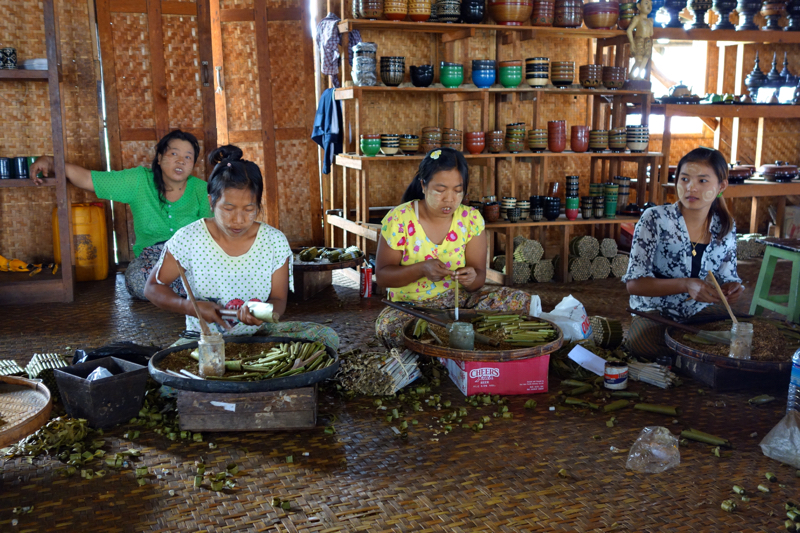
Then we were taken to a house where cigarettes were rolled by hand. They were wrapped in leaves, corn stalks were used as filters, and menthol or anise was added to the tobacco, which made the cigarettes smell very pleasant. We didn’t try smoking, but the house smelled wonderful.

Girls hand-roll cigarettes

Girls hand-roll cigarettes

Right here, near the cigarette mini-factory, we decided to eat because we were already very hungry, and there happened to be a little restaurant nearby. The food prices here were slightly above average, but the portion of fried vermicelli with chicken was huge.

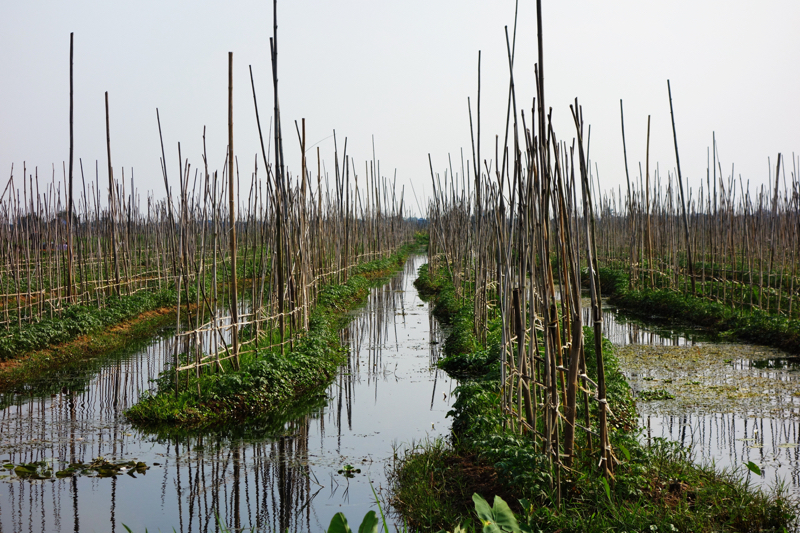
Then we drove through the floating gardens — it seems incredible that there are ordinary vegetable plots here on the lake, where people grow cucumbers and tomatoes.

Floating gardens, workers move between the beds by boat

Floating gardens, workers move between the beds by boat

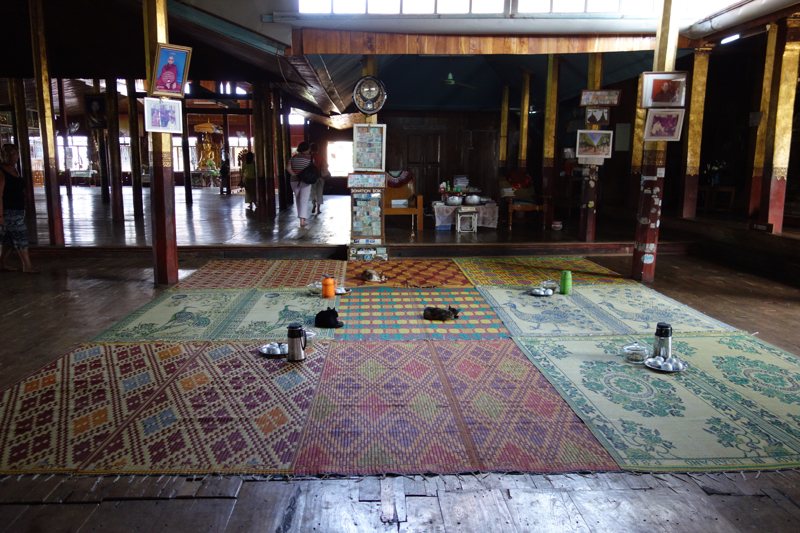
Our journey ended at the monastery with cats. In the past, the cats used to put on performances here, but now they are no longer trained and simply wander around the monastery or lie there, well-fed and content (it seems the cats here are fed rice; bowls of rice were standing everywhere on the floor)

Cats in the Monastery

Cats in the Monastery

Inle Lake leaves an indelible impression. At one point, I thought I could just keep riding like that all day - aimlessly, through narrow canals, occasionally heading out onto the lake, past stilt houses, past fishermen, along these improvised water streets. Everything there is absolutely mesmerizing. It is like another extraordinary world, a world on water - with a school, a post office, vegetable gardens, restaurants, hotels, people who work.

This is not an ordinary lake, not one of those beautiful lakes we saw in Switzerland. The nature here is not bad, but what amazes and captivates here is not it, but the people who live in these conditions, so close, shoulder to shoulder with this nature, and the world these people create by existing here. A real world, full of life, colors, smells, which makes what you see even more astonishing

For me, it remained a mystery - why these people settled here. Why put in so much effort, build houses on stilts, somehow raise vegetable gardens, build boats - all just to live on a lake, among the water, cut off from the rest of the world.

And so our journey came to an end. We thanked the driver and went to the hotel. In the evening, around 9, we decided to go out for dinner and were surprised to discover that our little town was almost dead - all the shops were closed, the lights in the houses were off, and at most a couple of restaurants were open. We went into one of them, sat on the second floor on the terrace, ate soup, and watched the dogs wake up and the last Myanmar people head home. Mostly tourists were walking along the street - apparently the locals go to bed very early.